Andromeda — The Life of Andromeda
The chained princess whose name reached a galaxy
Her mother's boast brought a sea monster to the coast, and Andromeda was chained to a rock as the price of the kingdom's safety. This telling follows her side of the famous rescue — and how her name came to rest among the stars.
Introduction
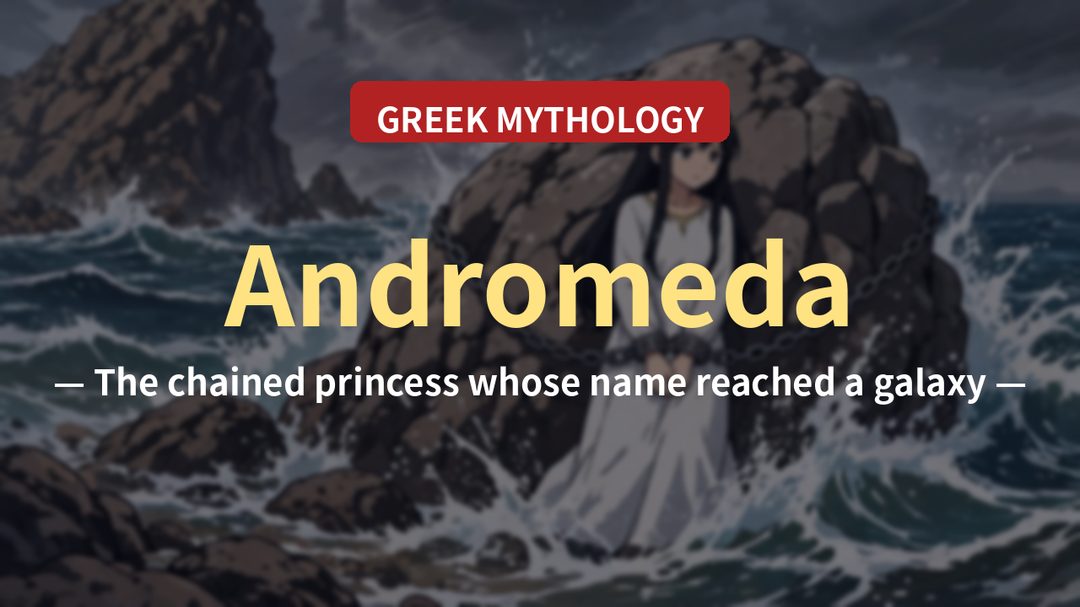
Do you know the story of a princess whose name would one day reach a galaxy? Chained to a rock by the sea, she was rescued by a hero who happened to pass by. Today, we tell the story of Andromeda herself — the one who was rescued.
The Mother's Boast
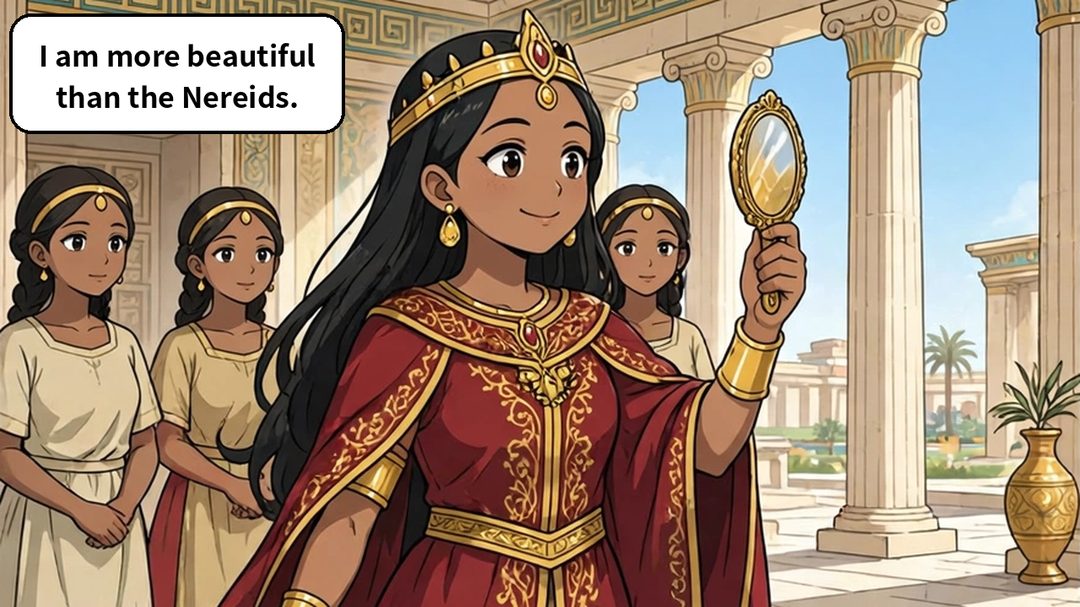
Cepheus, king of Ethiopia, had a queen named Cassiopeia. The queen took enormous pride in her own beauty. One day she declared: I am more beautiful even than the Nereids, the nymphs of the sea. But it was not a boast to be spoken where the gods could hear it.
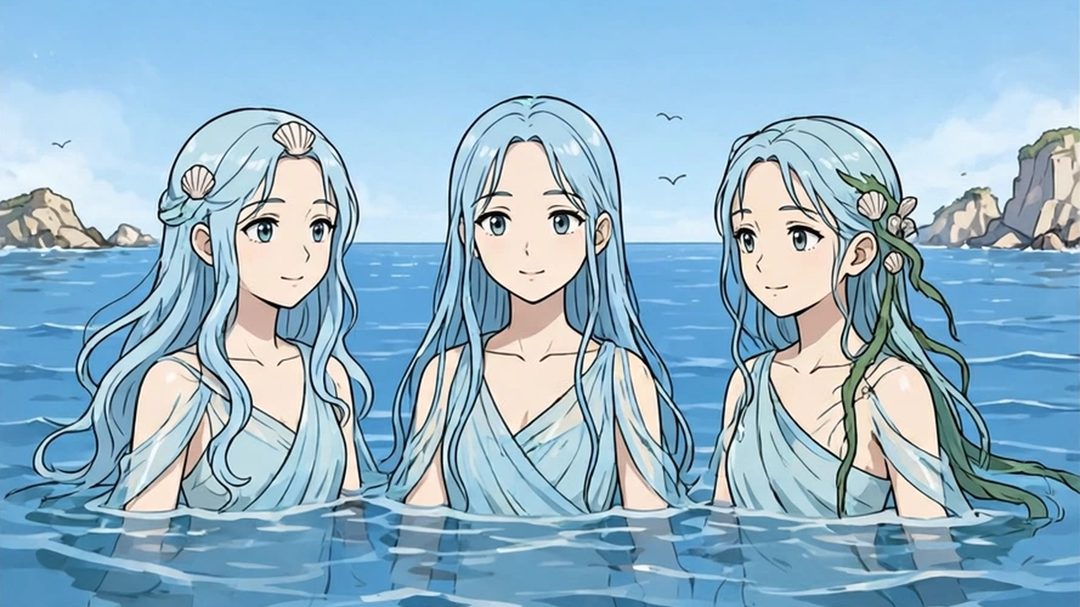
The Nereids were beautiful nymphs who served the god of the sea. The queen's words crossed the sea, and reached the ears of the nymphs. In their anger, the Nereids carried their complaint to the god beneath the waves.
The Calamity
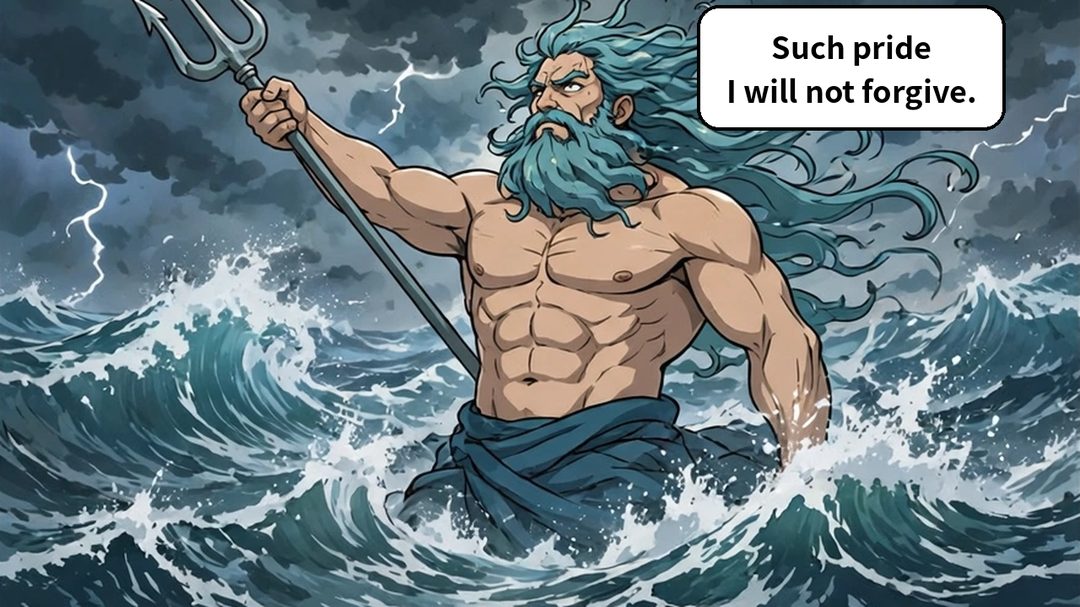
Poseidon, god of the sea, heard their plea — and granted it. As punishment, he sent two calamities upon the land of Ethiopia. One was a great flood that struck the shores. The other, a monstrous creature of the sea.
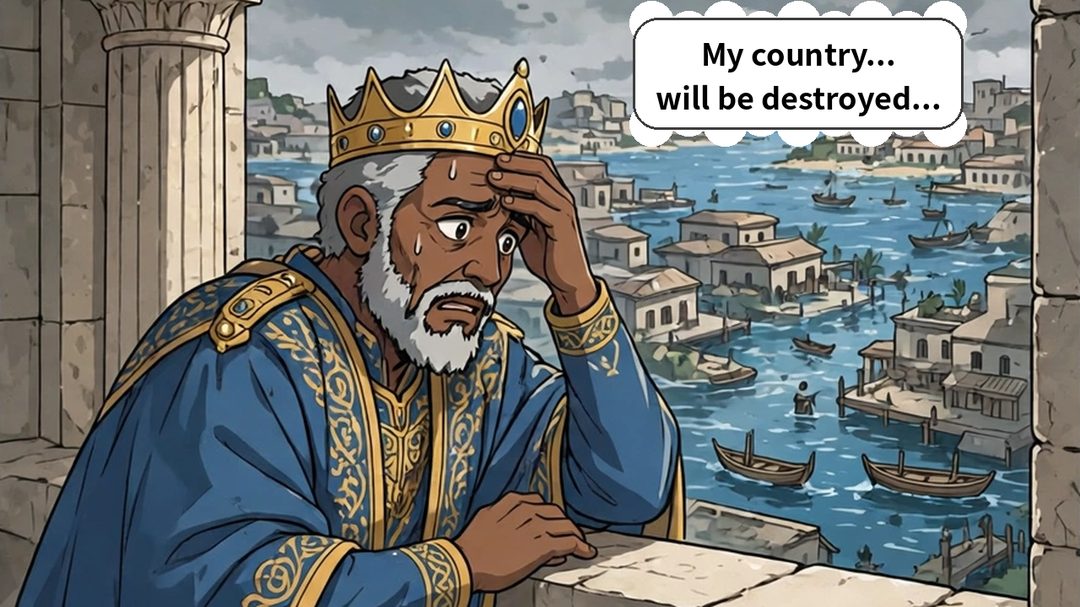
The monster, Cetus, sank ships and attacked the people of the coast. The flood swept away the fields, and day by day the kingdom grew poorer. King Cepheus resolved to ask the gods for a way to be saved.
The Oracle
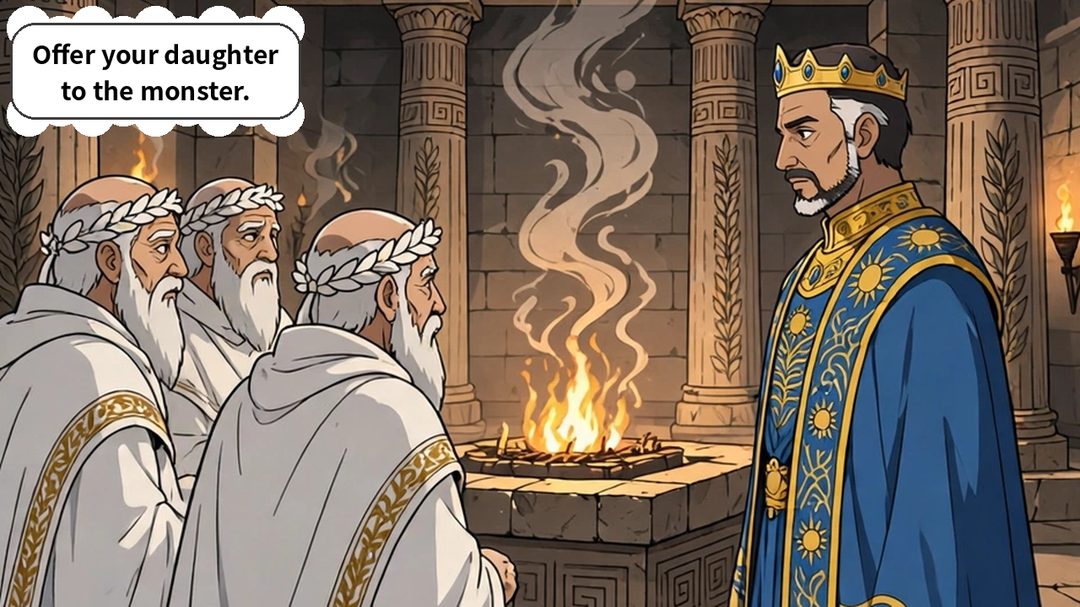
The king turned to the oracle of Ammon. The answer that came back was a cruel one. Offer your daughter Andromeda as food for the monster, and the kingdom will be saved. An answer that weighed one daughter's life against the lives of a whole kingdom.
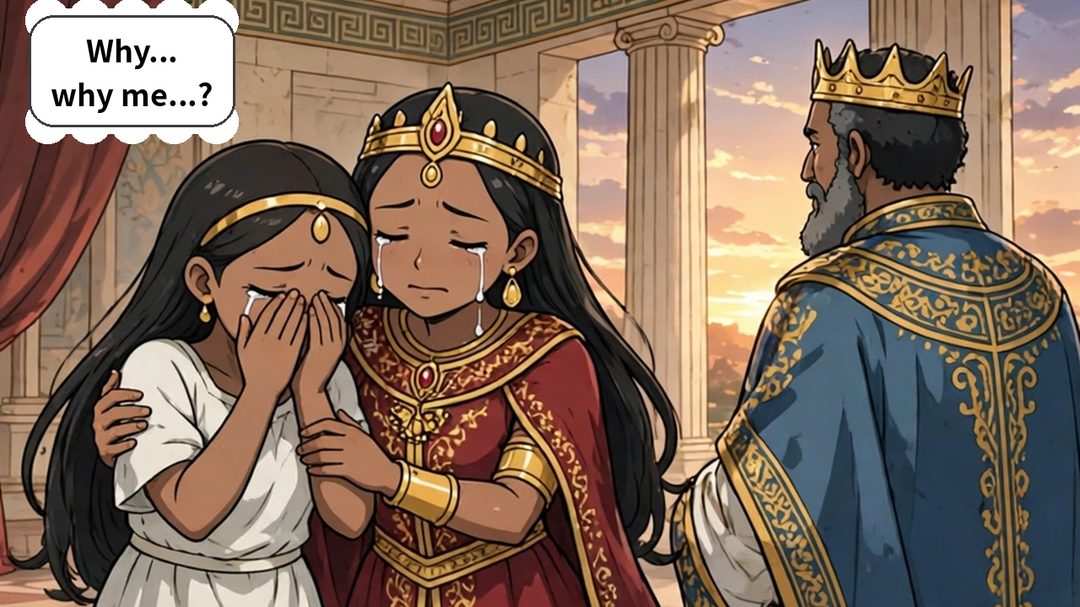
Andromeda heard the news in silence. How could one boastful word from her mother lead to the loss of her own life? The people pressed their king, and the king had no power left to refuse. And so the princess was chosen as the sacrifice.
The Princess on the Rock
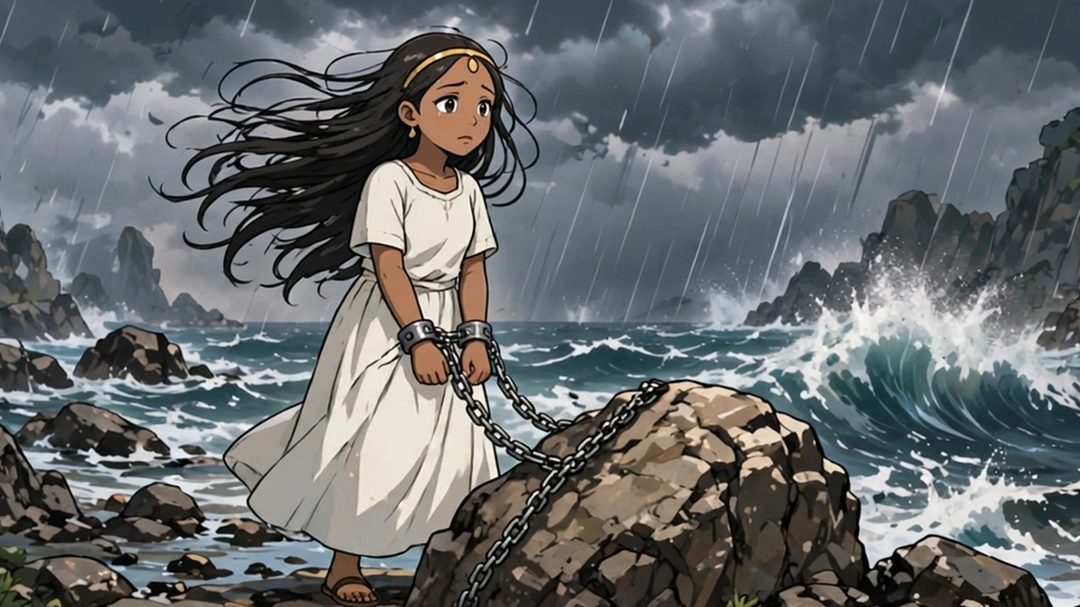
Andromeda was chained to a rock on the shore. The waves were washing in, right at her feet. Though she cried for help, there was no one her voice could reach.
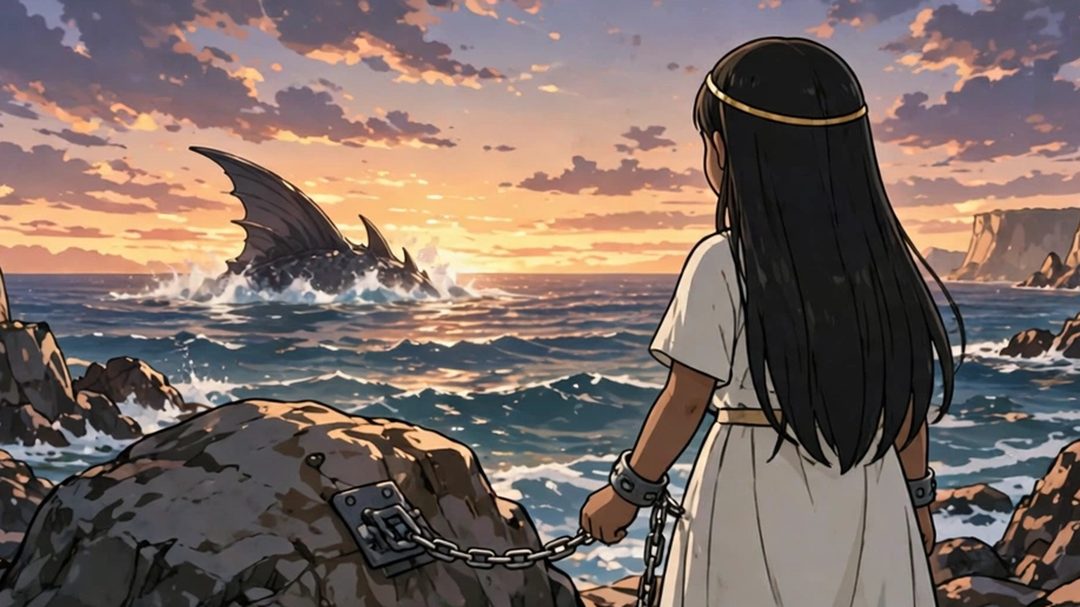
Time alone passed, slowly. And across the sea, the back of the monster drew nearer. All she could do was wait.
Perseus Arrives
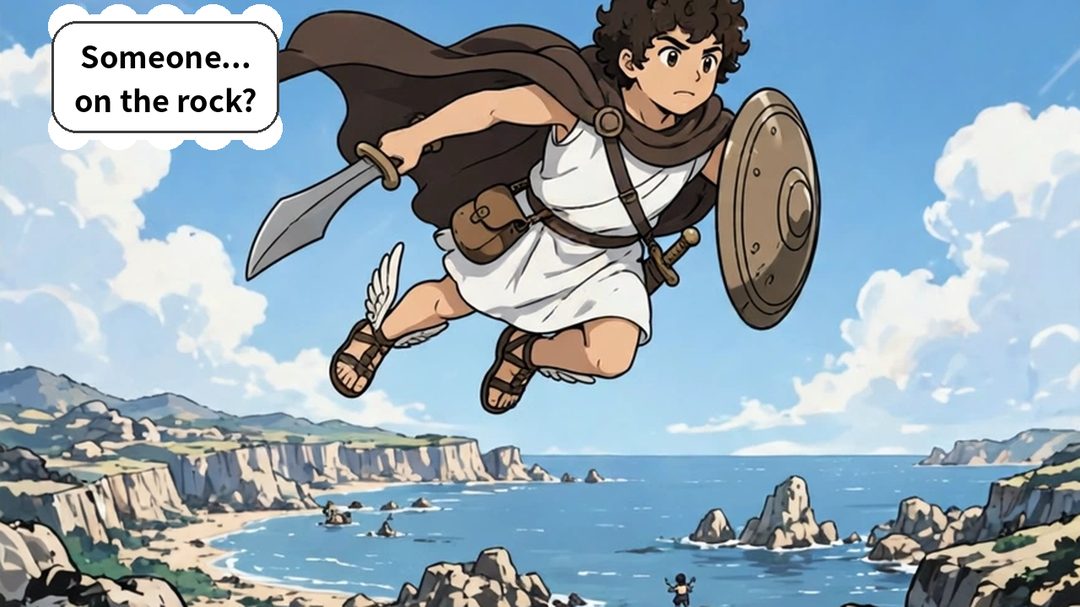
At that moment, a young man was flying through the sky. It was Perseus, on his way home after defeating Medusa. He saw the figure bound to the rock, and slowed in his flight.
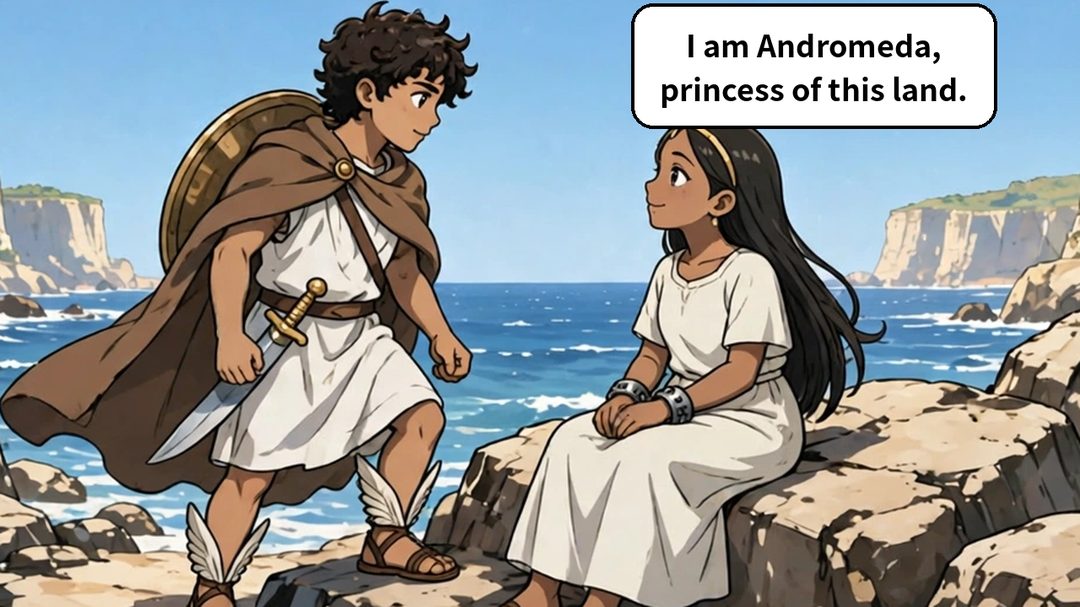
Drawing near, Perseus called out to her. Why are you chained in a place like this, he asked. Andromeda, though shy, told him all that had happened.
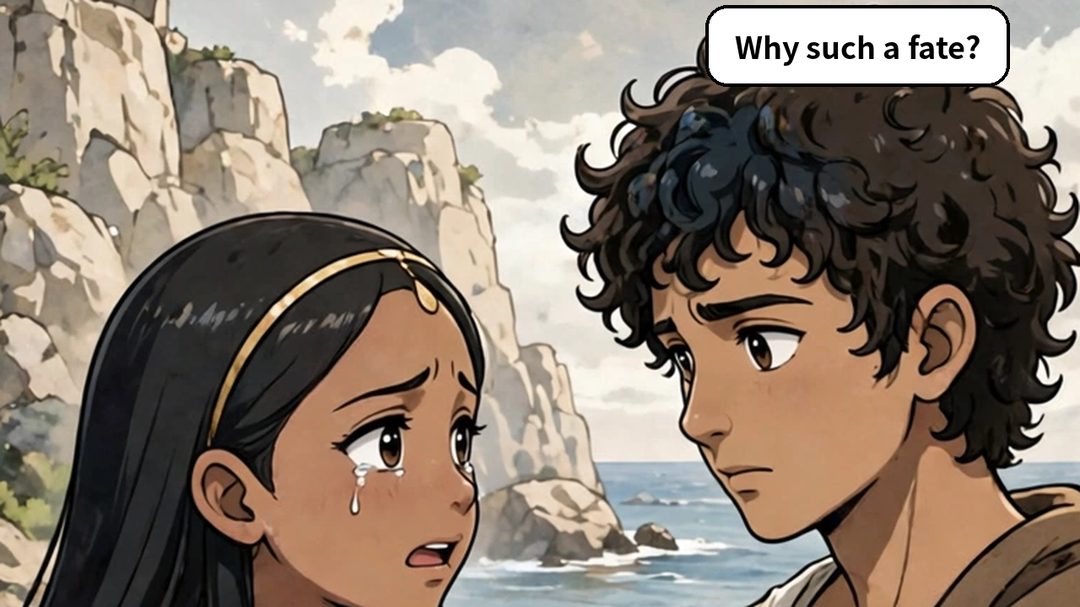
Her mother's boast, the calamity upon the kingdom, and how she herself had been offered up. Perseus listened in silence, to the very end. Then he turned — not toward the sea, but toward the palace of the king.
The Bargain
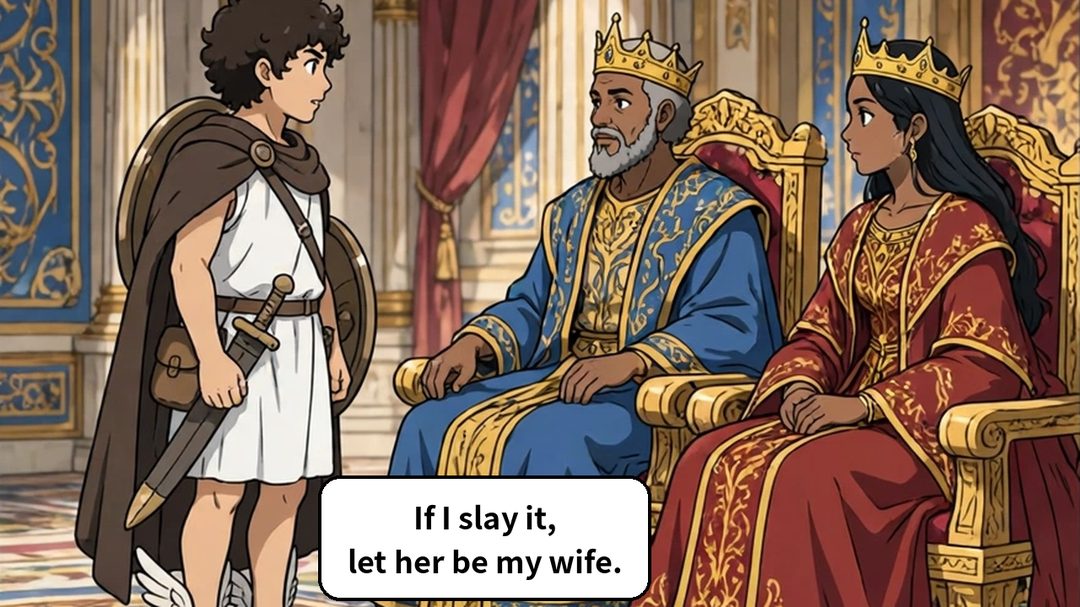
Perseus brought a bargain before King Cepheus. If I defeat the monster, give me Andromeda as my wife. The king accepted the promise at once. For the sake of his kingdom — and for the sake of his daughter.
The Fight with the Monster
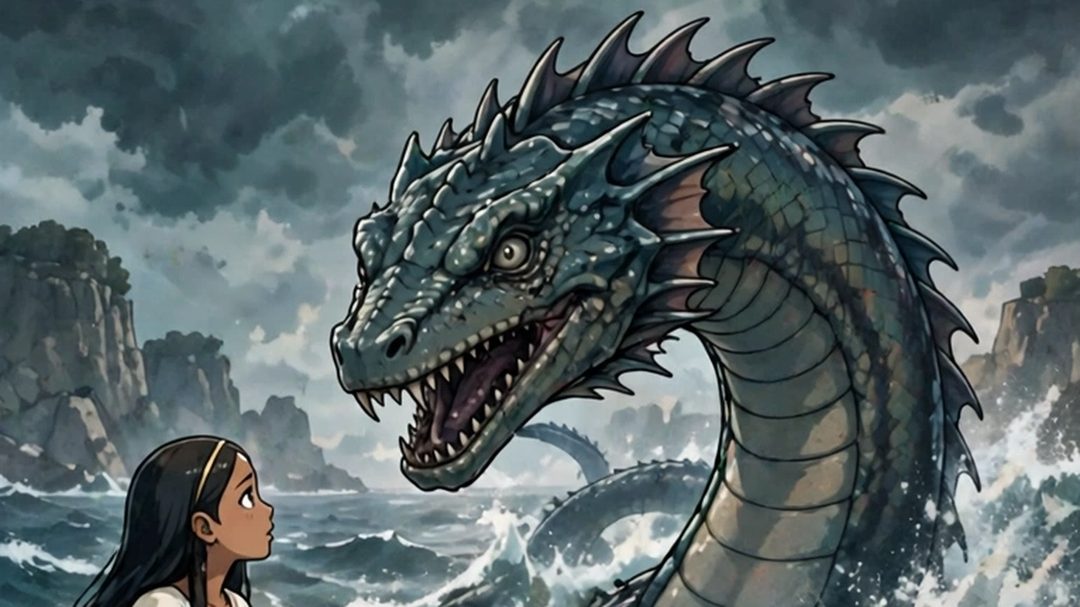
The sea rose up in a great swell. Cetus appeared — a body like a mountain. It drove straight toward Andromeda on her rock.
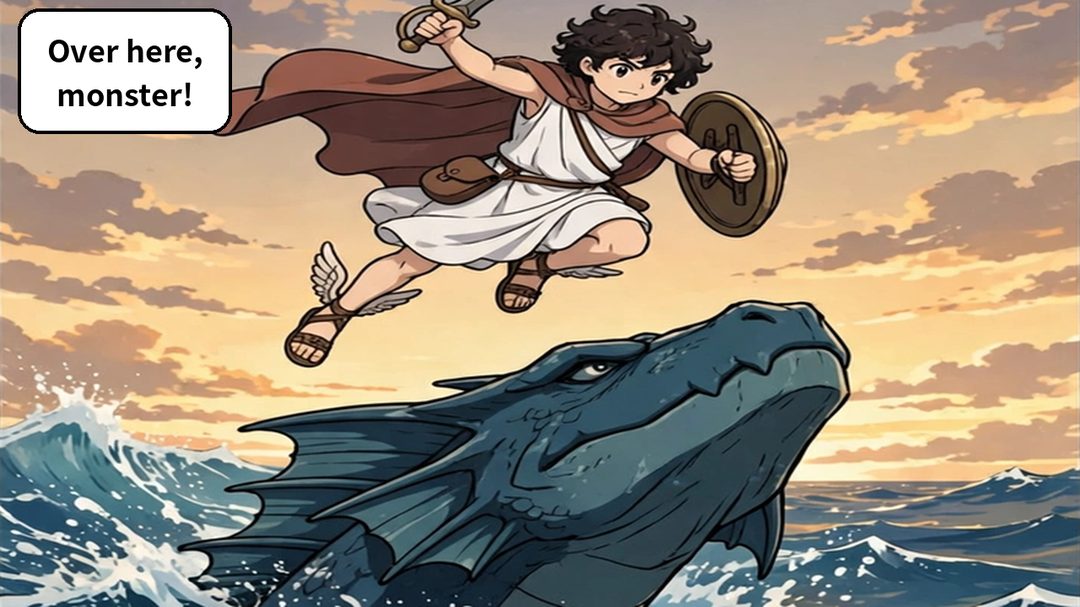
Perseus soared into the air and drew the monster's eyes to himself. His moving shadow fell upon the water — and the moment the monster looked up, he struck. Again and again he dove and swung his sword, until at last the monster was slain.
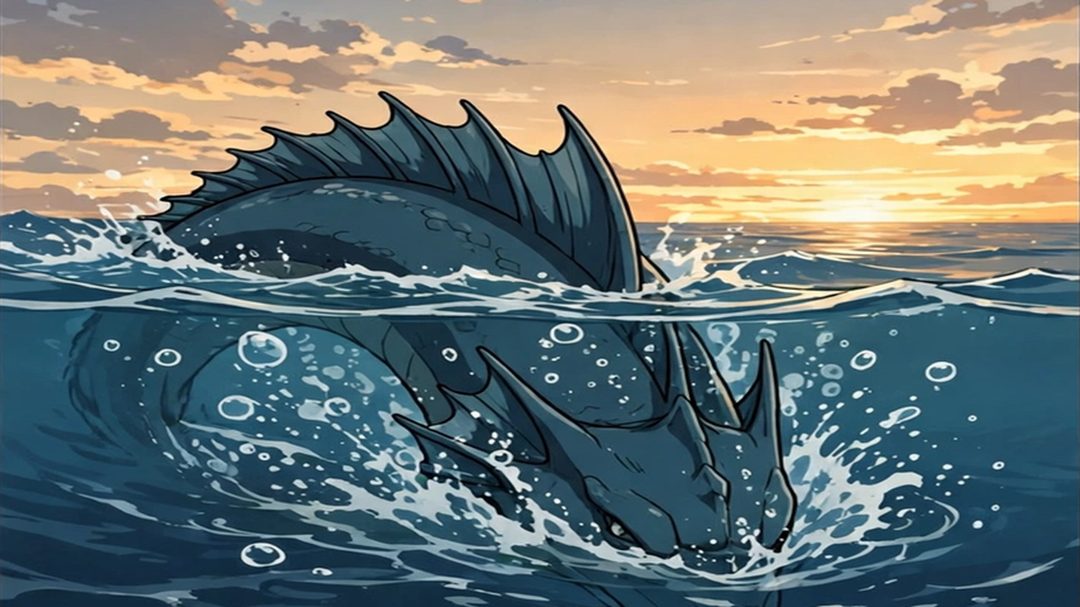
Slowly, the great body sank beneath the waves. The sea grew calm, and the cheers of the people on the shore rang out.
Set Free
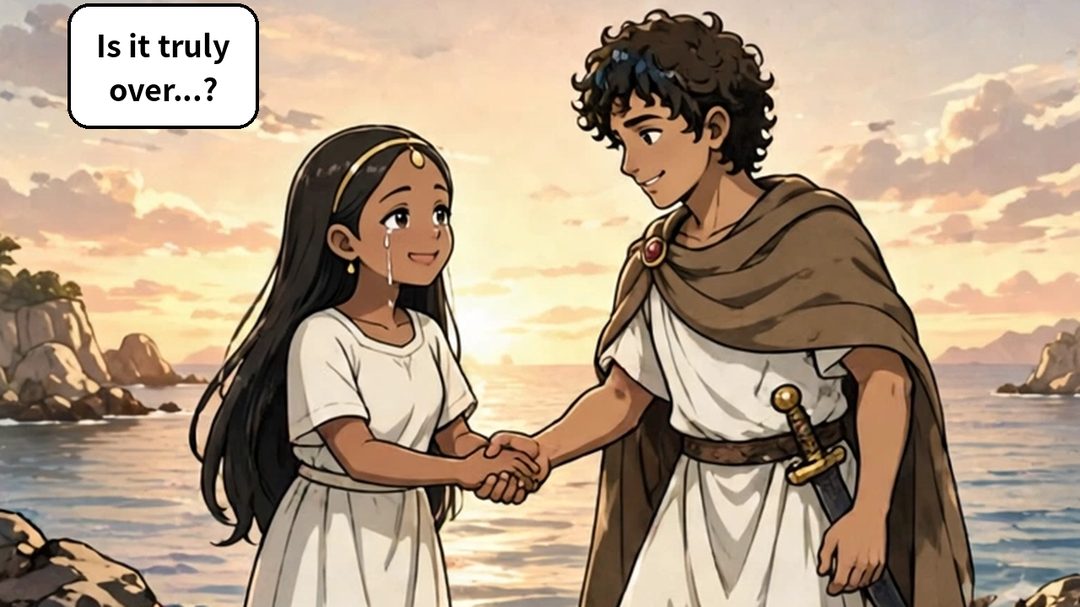
Perseus came down to the rock and undid her chains. Her wrists, bound for so long, were free. Andromeda's part had been only to wait, to be saved. And yet her name would live on, in a way no one could have expected.
The Wedding and the Strife
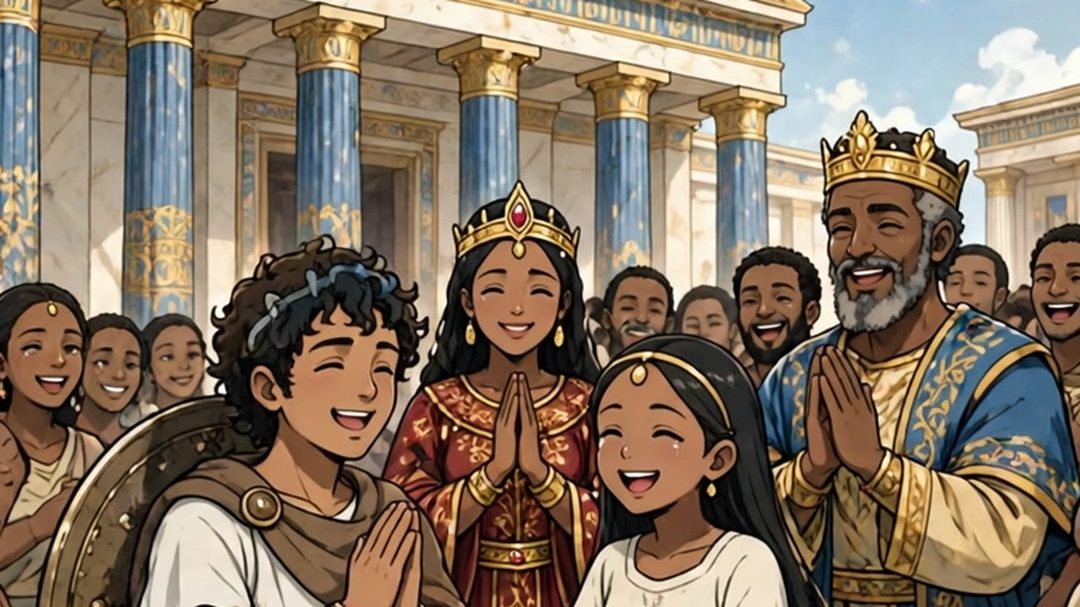
The two returned to the palace, and the people welcomed them. Preparations for the wedding were made. But then, an unexpected man appeared.
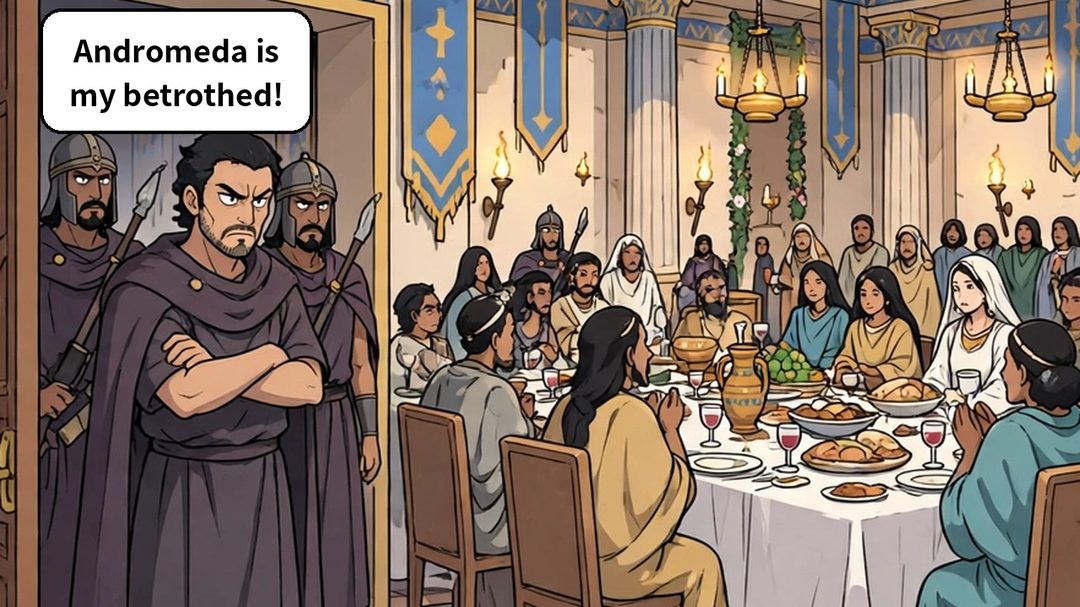
Phineus — the man to whom Andromeda had first been promised. He was also the younger brother of King Cepheus. The man who had shown no sign of himself before the monster now claimed his rights.
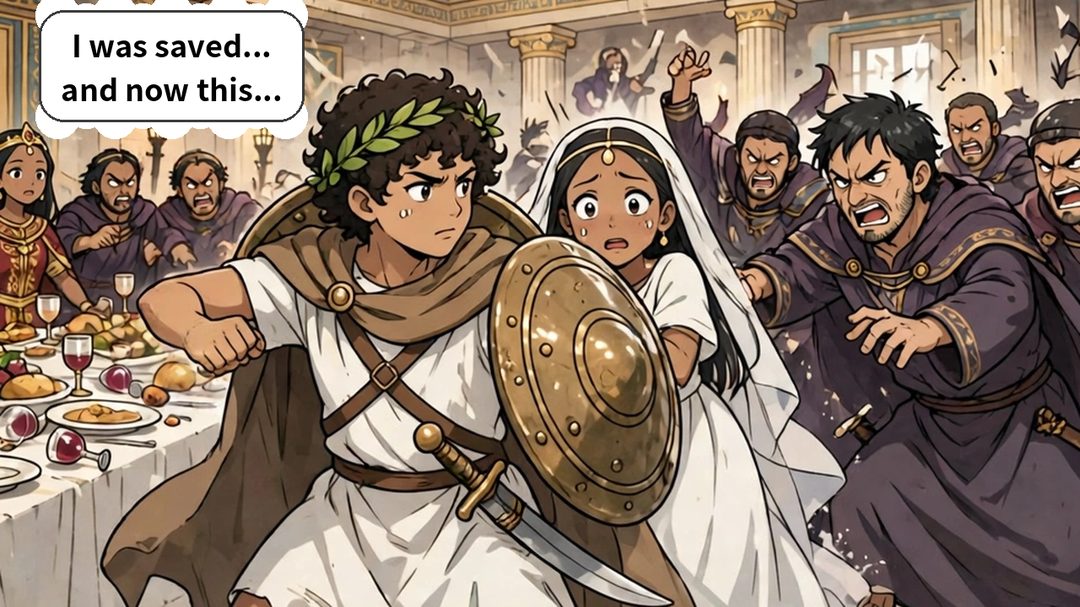
Phineus and his companions plotted their scheme at the wedding feast. The celebration turned, in a moment, into a place of conflict. Once again, Andromeda's fate was being shaken by forces beyond her own will.
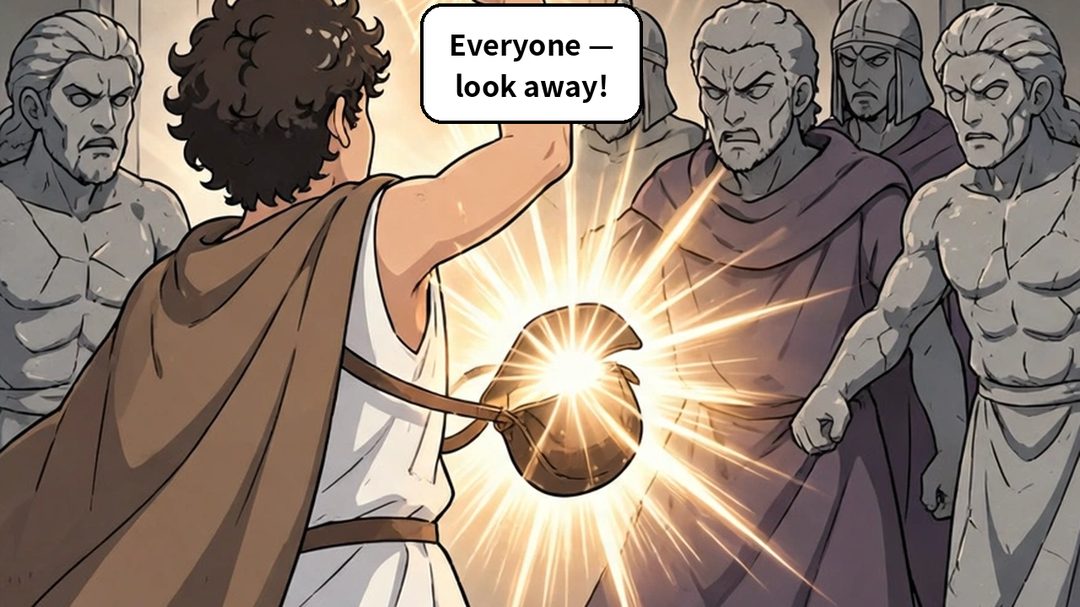
Then Perseus took up the leather bag in his hand. Turning his own face away, he showed them the head of the Gorgon, whose gaze turns men to stone. Phineus and his companions were turned to stone where they stood.
Among the Stars
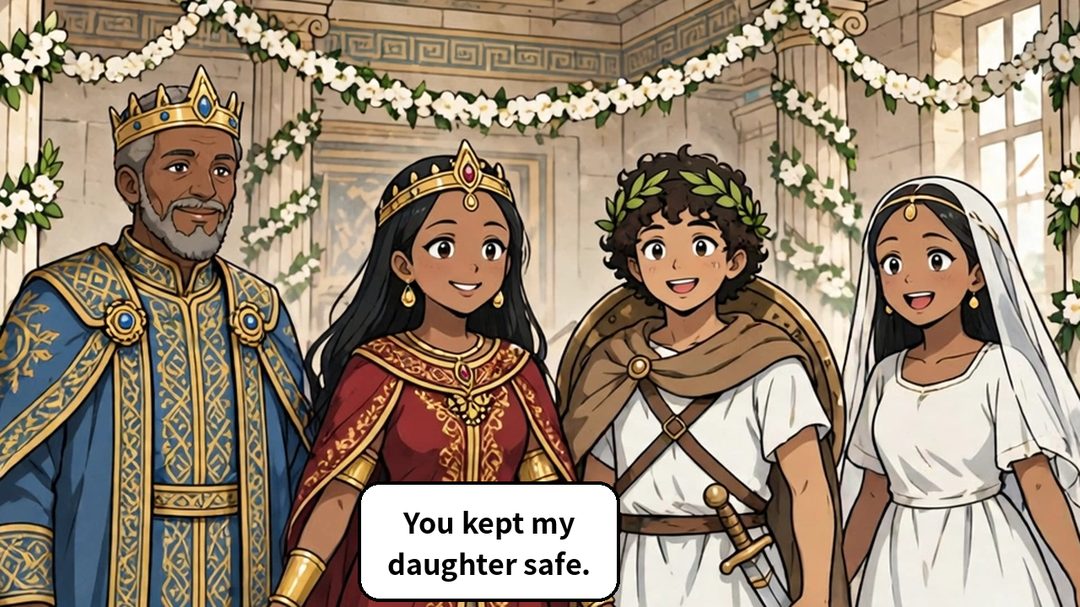
And so the wedding was held in peace. Andromeda set out with Perseus for his own country. Their son Perses, it is said, became the ancestor of the kings of Persia.
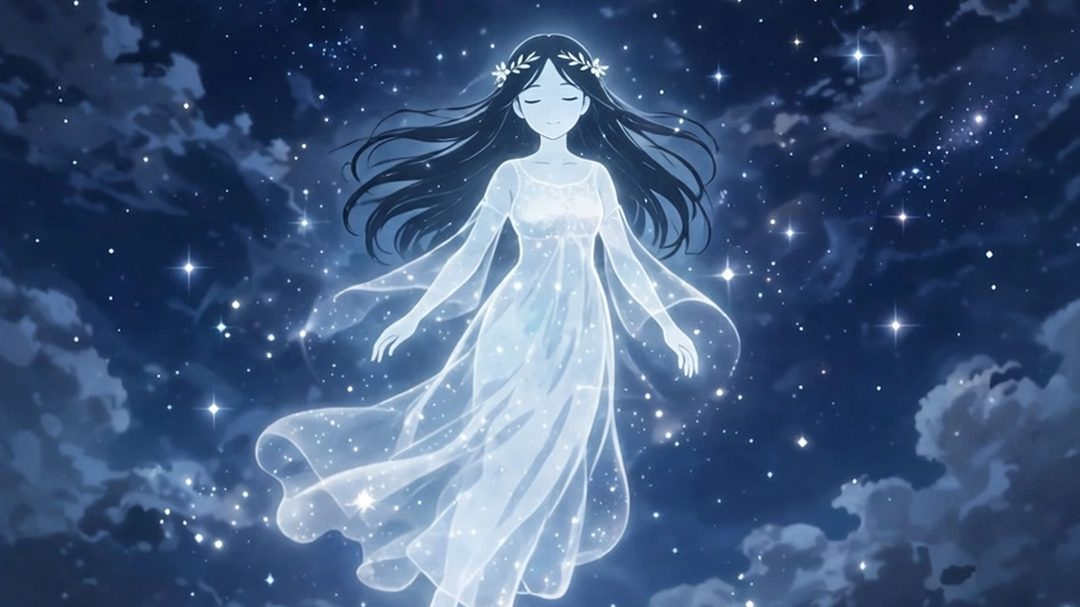
When at last she died, the goddess Athena, it is said, placed her among the stars. So that the story of her suffering would remain in the sky. That is the constellation Andromeda, which we still see today.
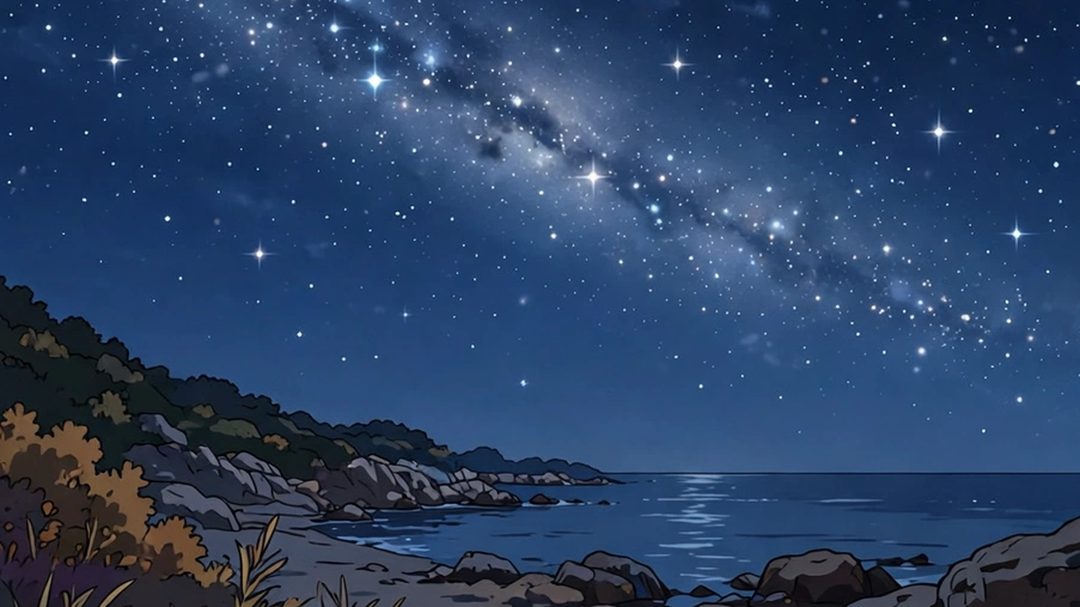
In the autumn night sky, her chain of stars can be seen. Beside her stand her mother Cassiopeia and her father Cepheus — and Perseus, too, is nearby. The monster of the story was placed in the nearby sky as Cetus, the Whale. The family, and those who shared her fate, are gathered in a single sky even now.
A Name upon a Galaxy

And her name reached farther still. In the direction of her constellation lies a great spiral galaxy. The Andromeda Galaxy — some two and a half million light-years from Earth. The name of the princess in chains remained upon a galaxy.
About the Sources
Now, let us be clear about where today's story comes from. The main thread follows Apollodorus, in Book Two of his Library. The details of the fight with the monster follow Ovid's Metamorphoses — and the tale of the stars, the star-book of Eratosthenes. Where the old tellings differ, we chose one main form to follow.
In Summary
To sum up: Andromeda was a princess offered up for someone else's boast. And yet her name became a constellation — and remained upon a galaxy.
Sources and basis
Sources
- Apollodorus, Library 2.4.3–2.4.5 — the standard for the main thread.
- Ovid, Metamorphoses, Books 4–5 — the details of the fight with the sea monster.
- Eratosthenes, Catasterismi — the source for the constellation story.
Variants and notes
- Apollodorus has Cassiopeia boast of her own beauty; some later tellings make it her daughter's beauty instead. This telling follows Apollodorus.
- The speech-bubble dialogue is original writing that keeps the meaning of the ancient scenes.