Perseus — The Life of Perseus
Why the prince cast adrift at sea went to fight Medusa
A king who feared the son his daughter would bear set the baby adrift on the sea. Grown up, Perseus was tricked into promising the head of the Gorgon Medusa. This is the story of how he won it — with tools, wit, and the discipline never to look.
Introduction
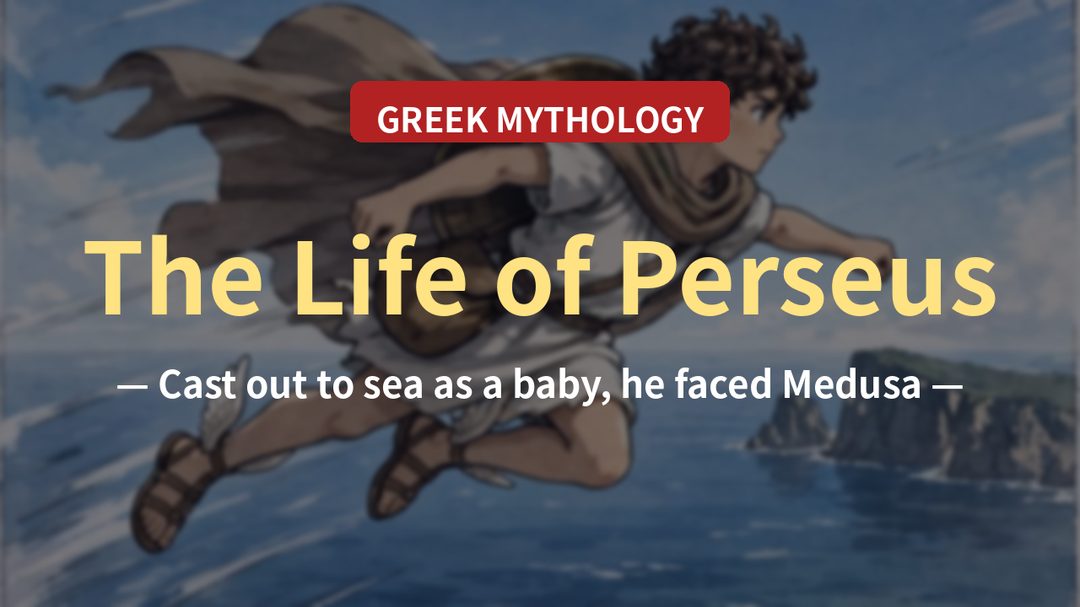
There was a monster whose very gaze turned men to stone. A young man was sent to bring back her head. His name was Perseus. Why did he have to set out on a journey that walked so close to death? Today, we follow the story of his life.
The Oracle
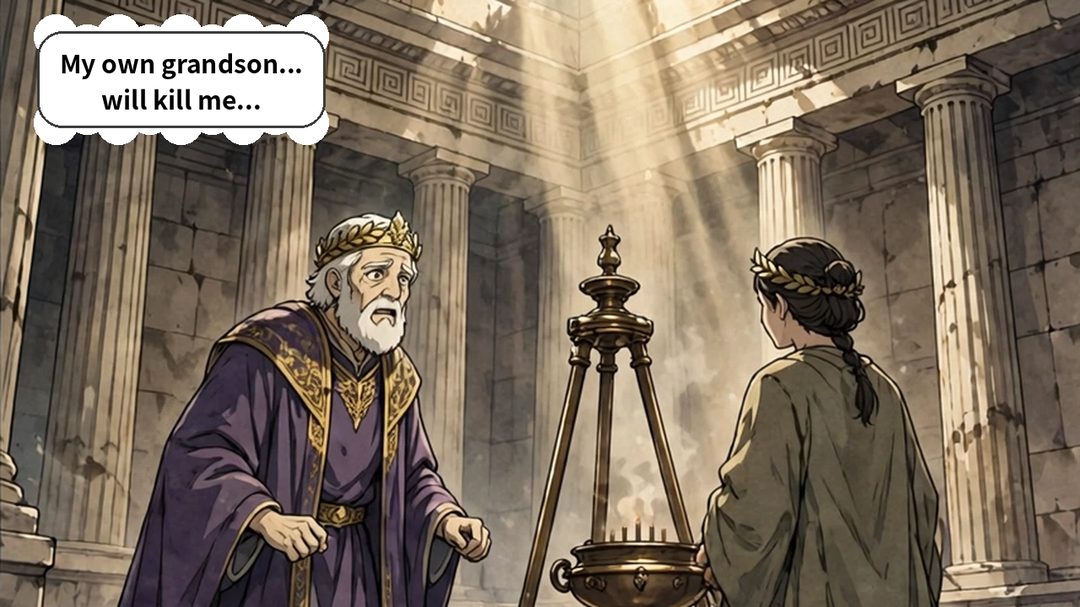
Acrisius, the king of Argos, had one daughter — Danaë. The king longed for a son, and he asked the god: how might a son be given to me? The answer that came back was cold: the son your daughter bears will kill you. In fear, the king built a chamber of bronze beneath the earth, and shut Danaë inside.
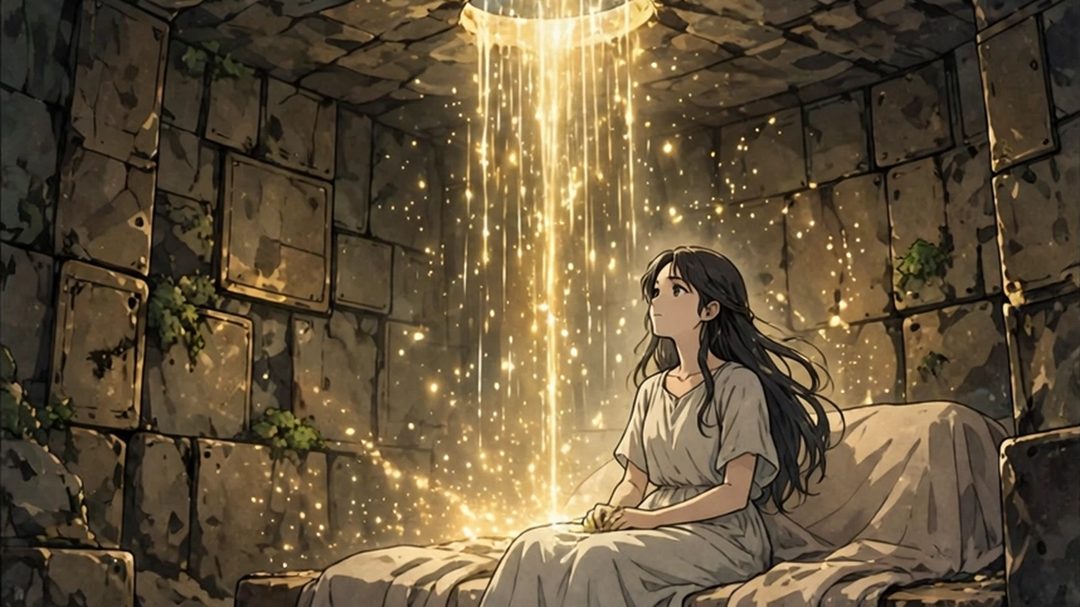
But what the gods do is beyond the wisdom of men. As the story is told, Zeus took the shape of a stream of gold. The golden rain slipped through the roof and poured quietly into Danaë's lap. In time, Danaë bore a son. His name was Perseus.
Cast Out to Sea
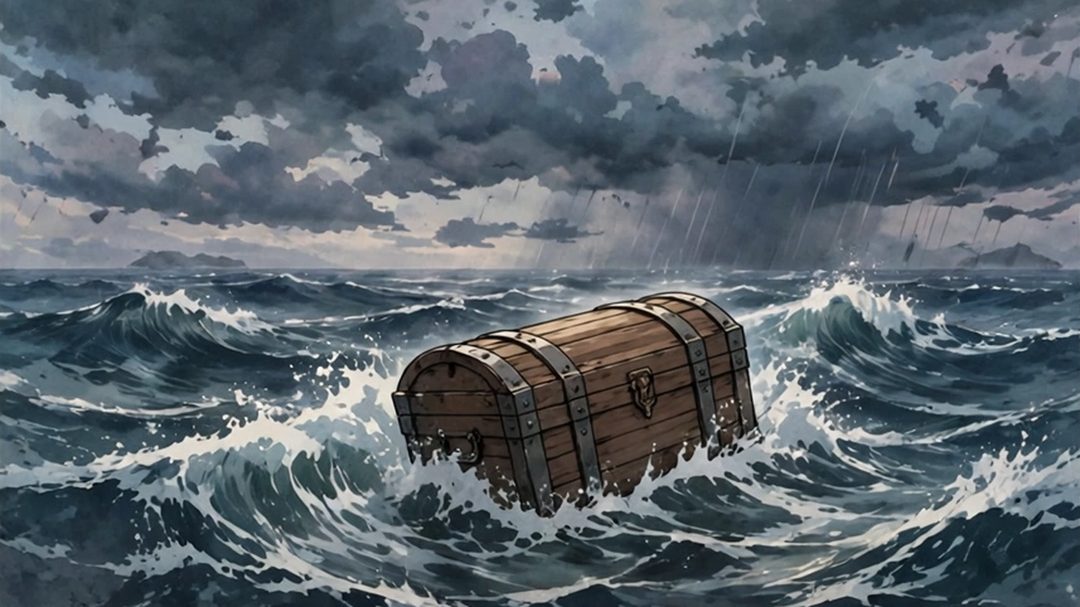
When the king learned of the child, he would not believe the boy was the son of Zeus. He placed his daughter and her child in a wooden chest, and cast them out to sea. The chest rode the waves, drifting on, no one knew where.
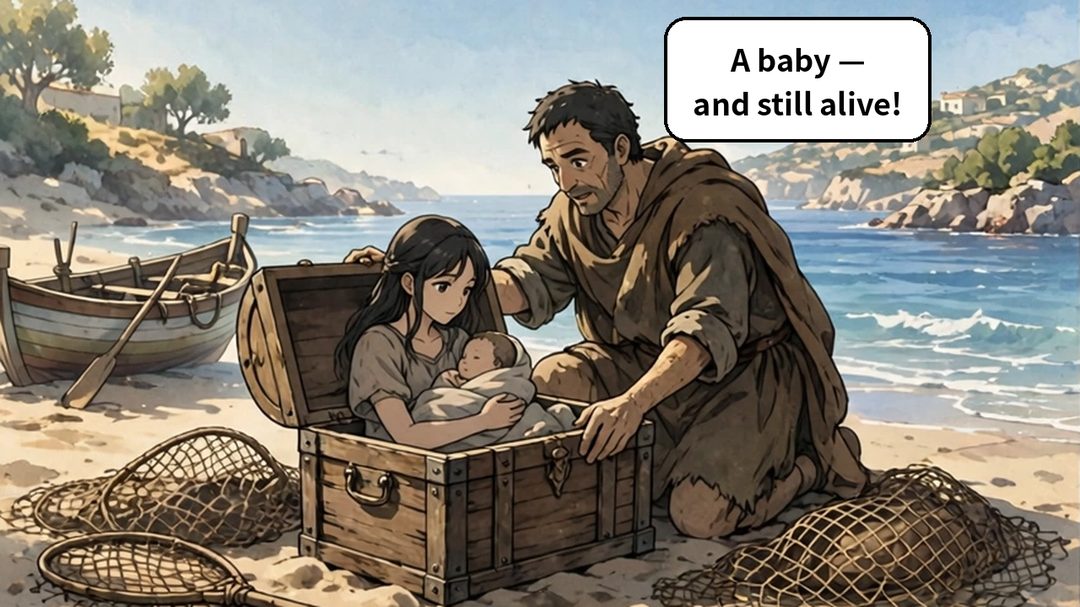
The shore the chest reached was Seriphos, a small island. A fisherman named Dictys hauled in his net — and found the chest caught in it. Inside were a young mother and a small boy. Dictys took them into his own home. And there, on that island, Perseus grew up, almost as a fisherman's own child.
The King's Plot
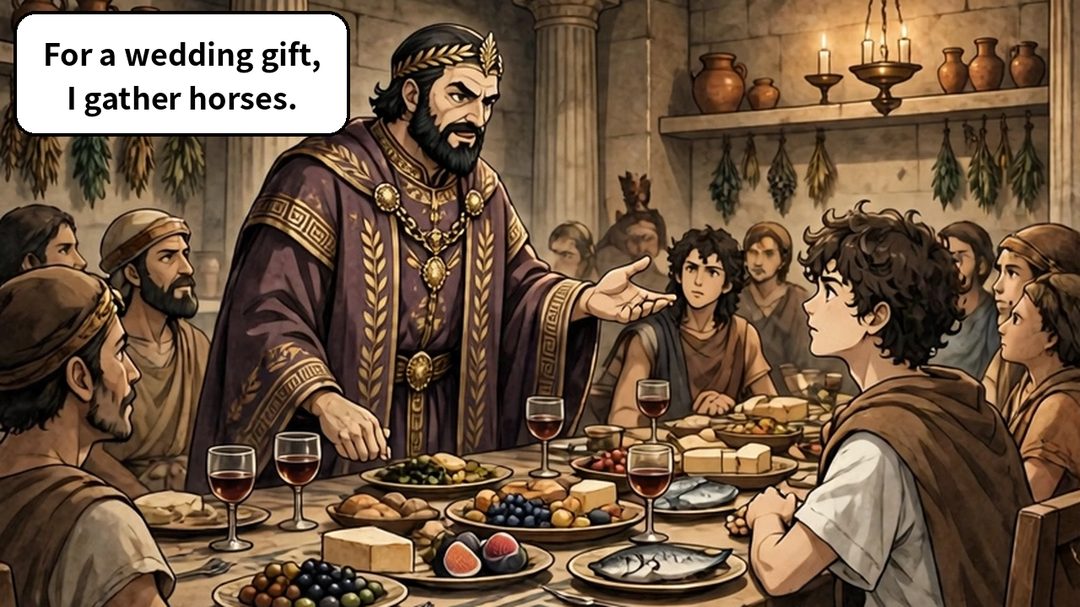
In time, Perseus grew into a fine young man. By then the king of the island was Polydectes, the younger brother of Dictys. The king had set his heart on Danaë. But Perseus, now grown, stood in his way. So the king devised a plan. He called the men together: I am gathering wedding gifts for a king's daughter, he said. Bring me horses.
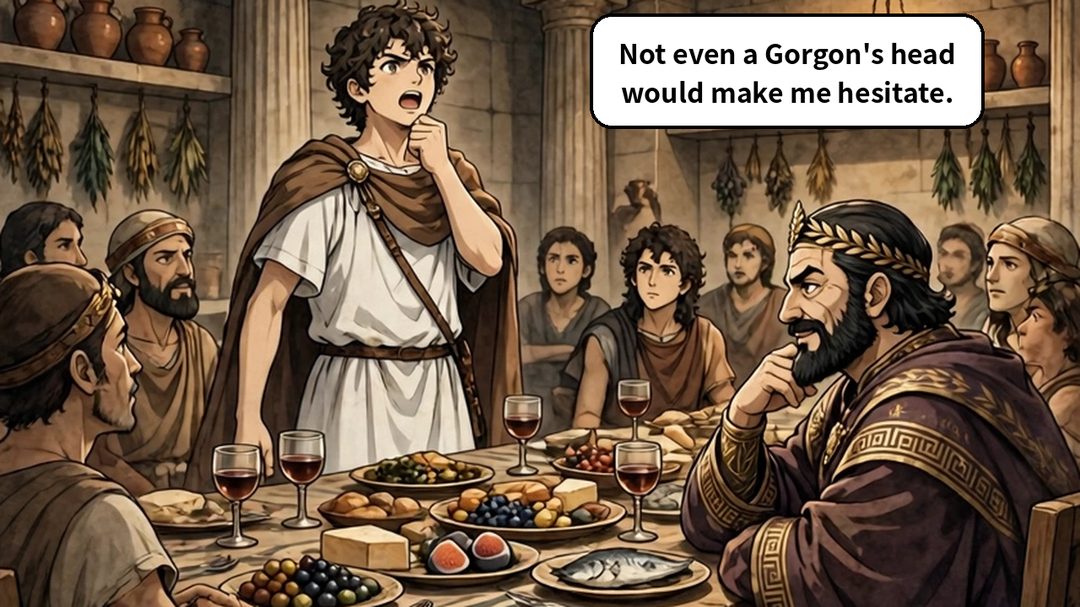
Young Perseus owned no horse. But his pride would not let him stay silent. Not even the head of a Gorgon would make me hesitate, he said. It was exactly the word the king had been waiting for. The others owed horses. Perseus was ordered to bring the Gorgon's head. The Gorgons were three monstrous sisters whose gaze turned men to stone. One of them was Medusa.
Guided by the Gods
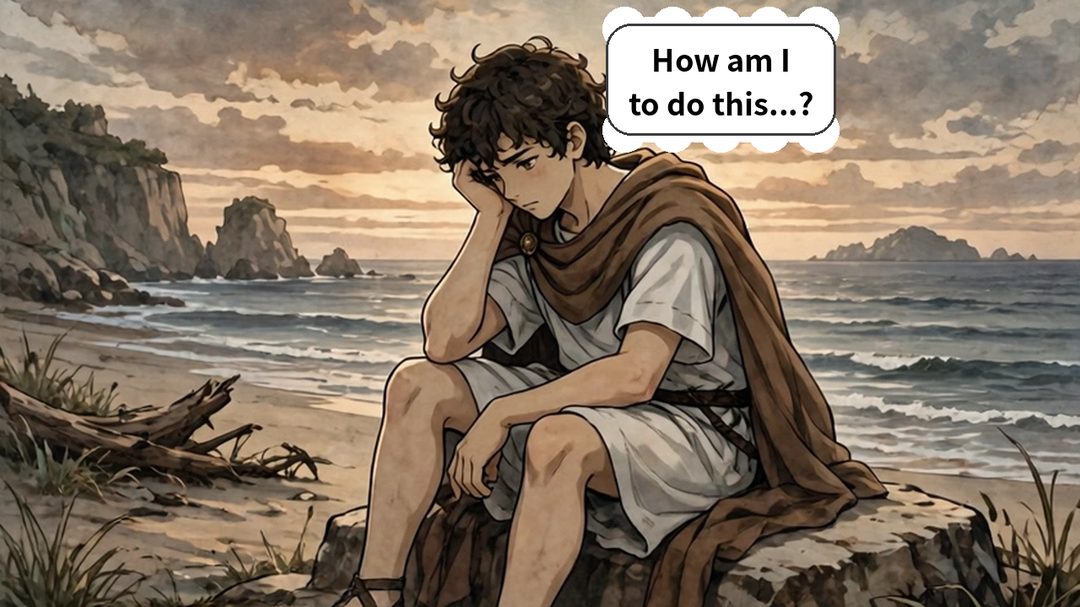
Ordered to go — yet the young man had no way even to begin. The Gorgons lived at the edge of the world. He knew neither the road to them, nor how to defeat them. But this journey would have its guides.
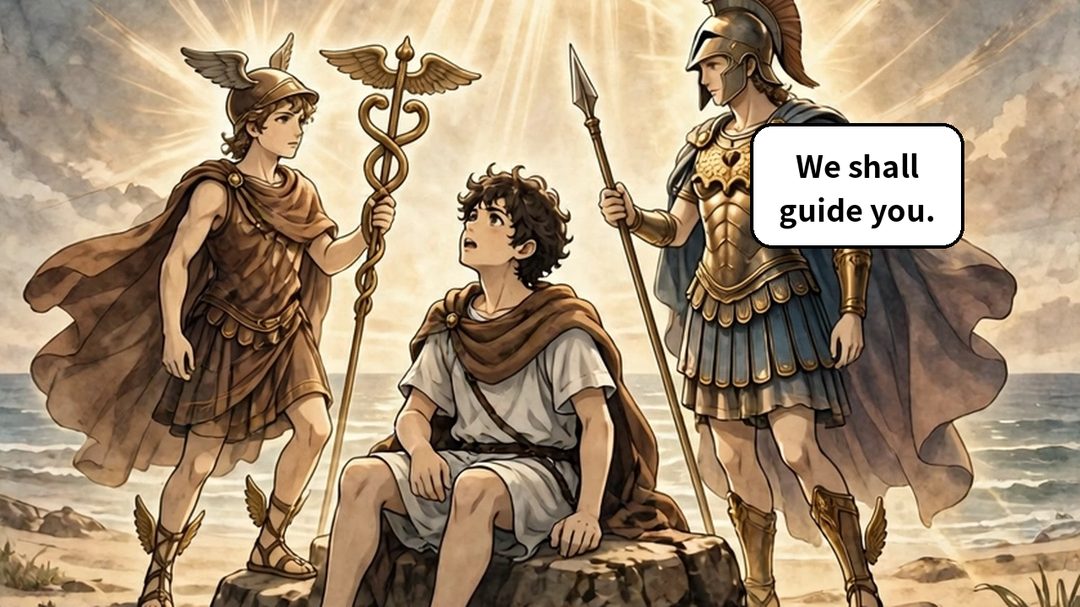
Athena, goddess of wisdom — and Hermes, god of travelers. The two gods told Perseus the first ones he must seek out. The Graeae, the sisters of the Gorgons. They would know the road to those who held the tools he needed.
The Graeae
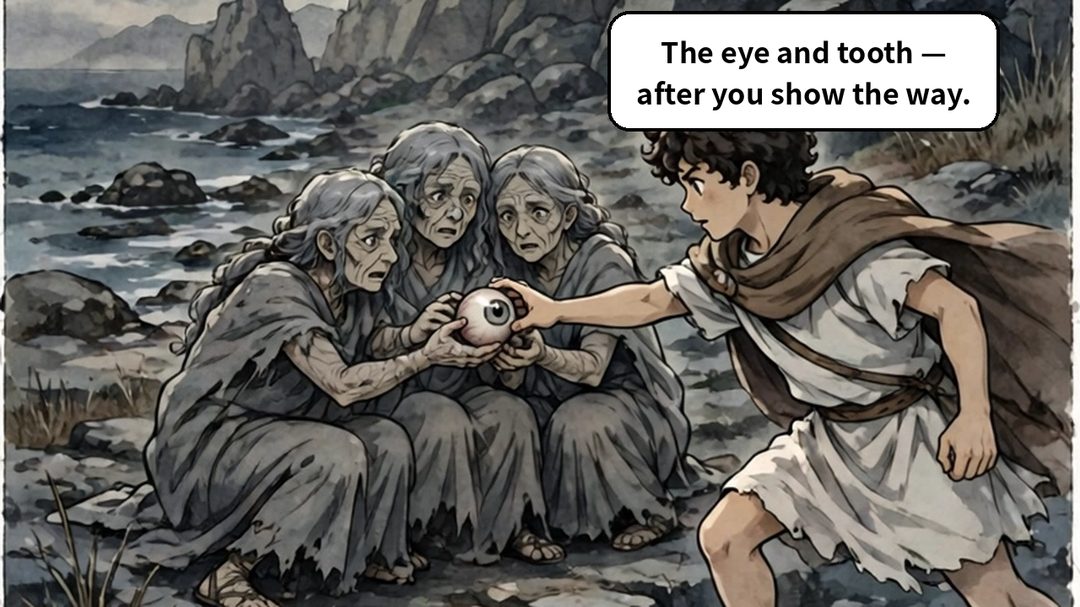
The Graeae were three old sisters, born already old. Between the three of them they shared a single eye — and a single tooth — passing them from hand to hand. Perseus watched for the moment the eye and tooth were mid-passage — and snatched them away. The sisters begged for them back — and in exchange, they told him the way. He returned the eye and the tooth, as he had promised.
The first gate of the journey was opened not by force, but by wit.
The Tools
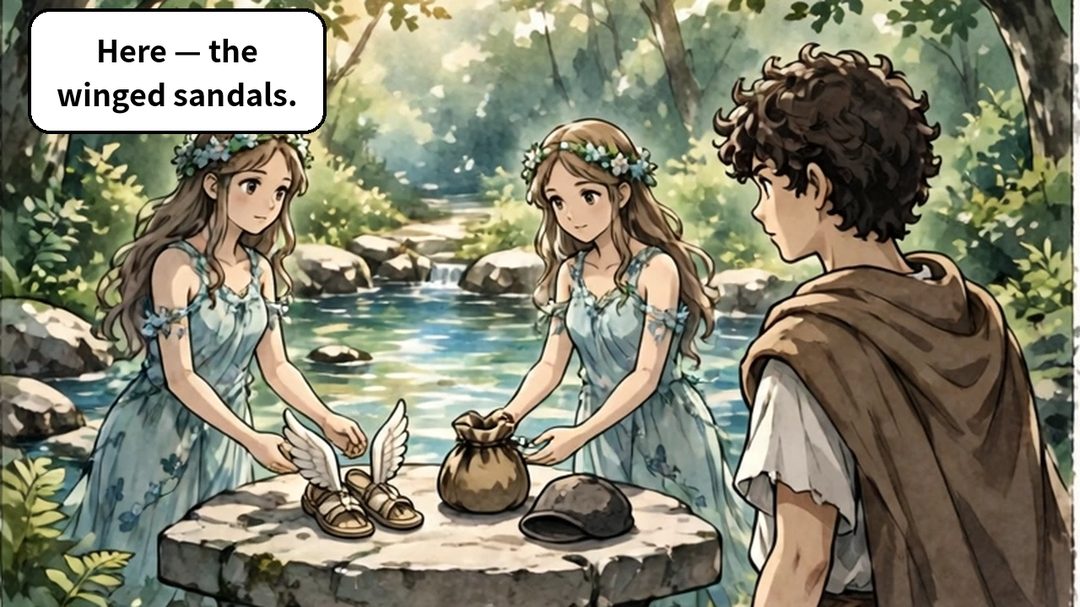
Where the sisters directed him, he found the nymphs of the waters. In their keeping were three tools his journey could not do without. Winged sandals that fly through the air — and a leather pouch, the kibisis, that can hold anything. And the cap of Hades, which hides whoever wears it from every eye.
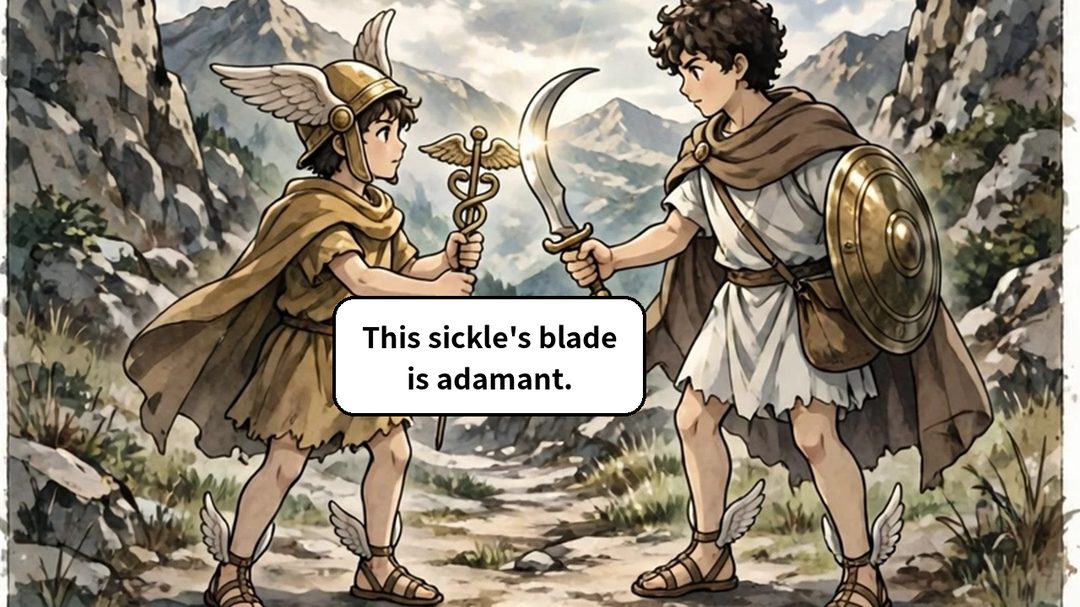
From Hermes he received a sickle of adamant — a blade that can never break. His tools were ready. But one warning mattered more than all of them. He must never look at Medusa directly. To look was to be turned to stone on the spot.
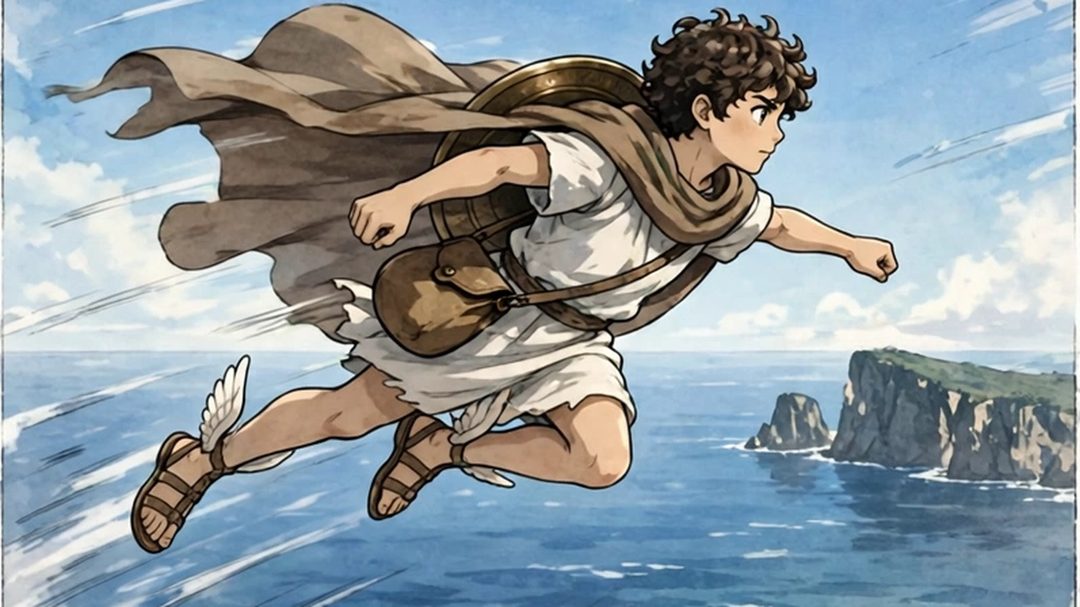
On the winged sandals, Perseus flew out across the great sea.
Medusa
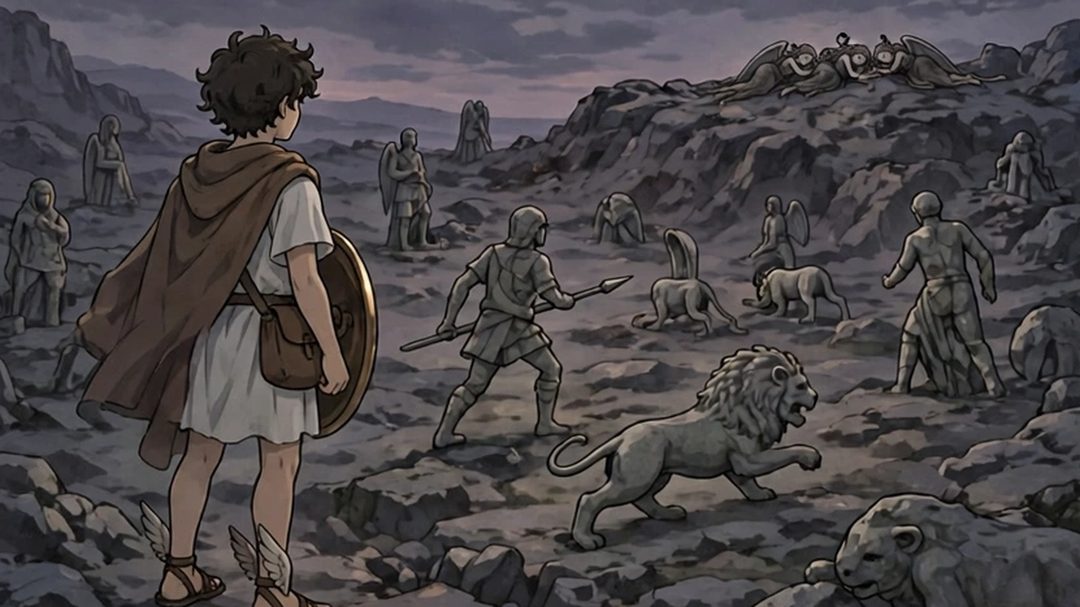
In the land where the Gorgons lived, the stone shapes of men and beasts stood in rows. The shapes of those who had come too close — and never returned. The three sisters were sleeping: Stheno, Euryale, and Medusa. Of the three, Medusa alone was fated to die. That is why her head was the one demanded.
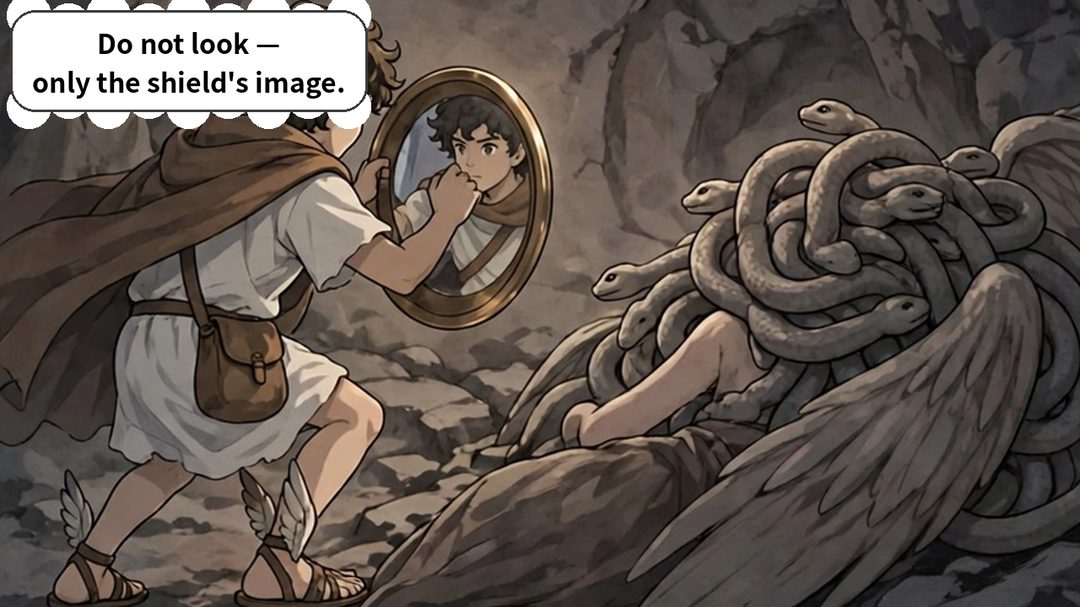
Perseus drew close in silence, his face turned away. All he watched was the image in his bronze shield — and Athena gently guided his hand.
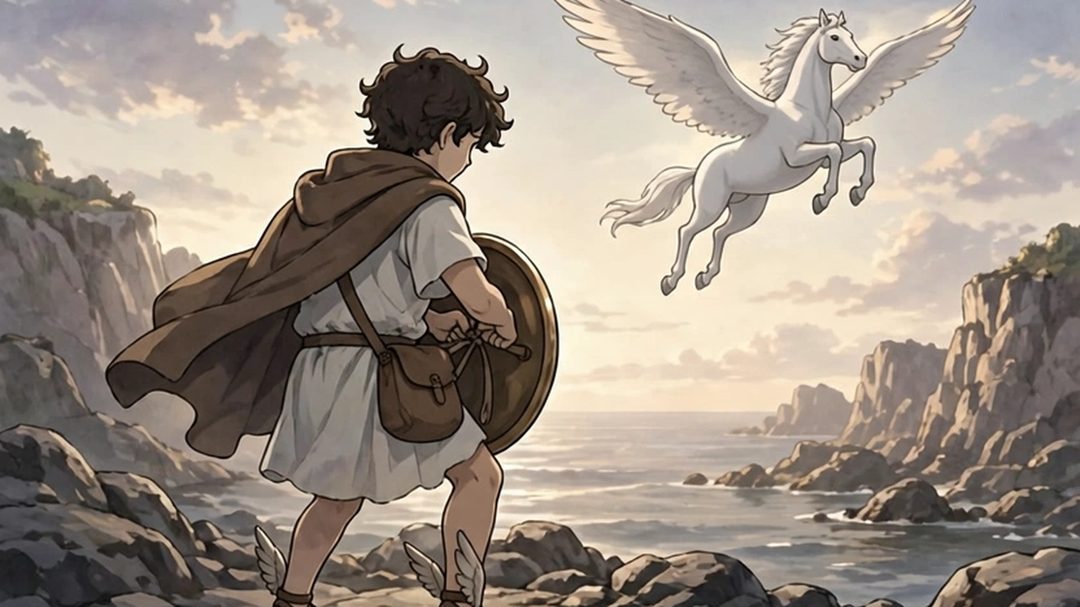
In the next moment, it was over. The head was shut away in the kibisis. He would never look upon it directly again. And at that moment, they say, a winged horse rose into the sky. Pegasus.
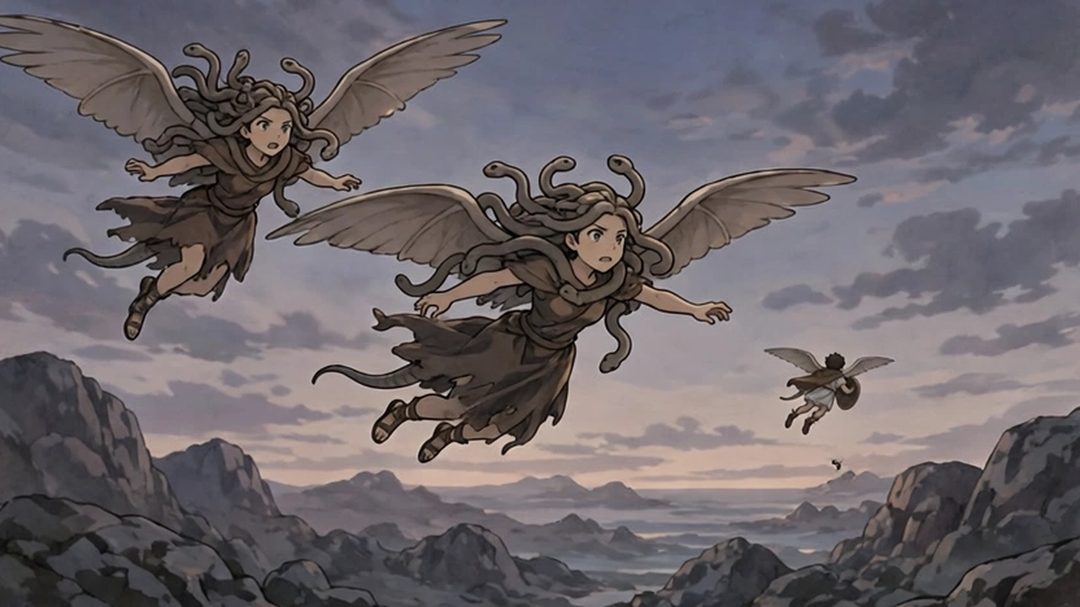
The two sisters woke, and came after him in pursuit. But the cap hid his shape from every eye. The chase ended in vain.
Atlas
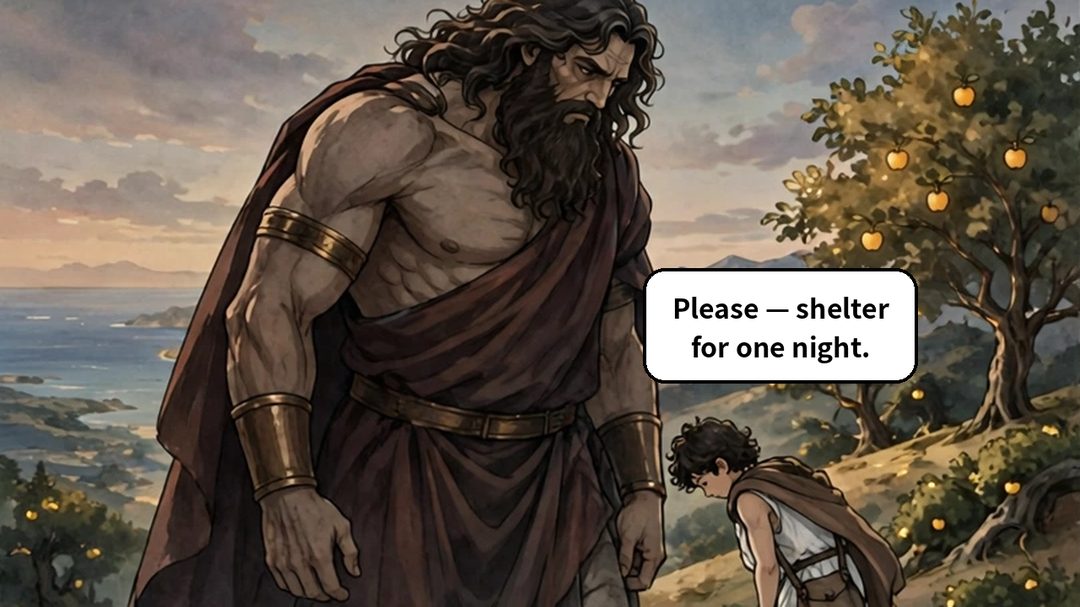
Here, our story joins an earlier one — a different telling, sung by the Roman poet Ovid. On his way home, at evening, Perseus came to Atlas, the giant at the western edge of the world. But Atlas refused to give him shelter for the night.
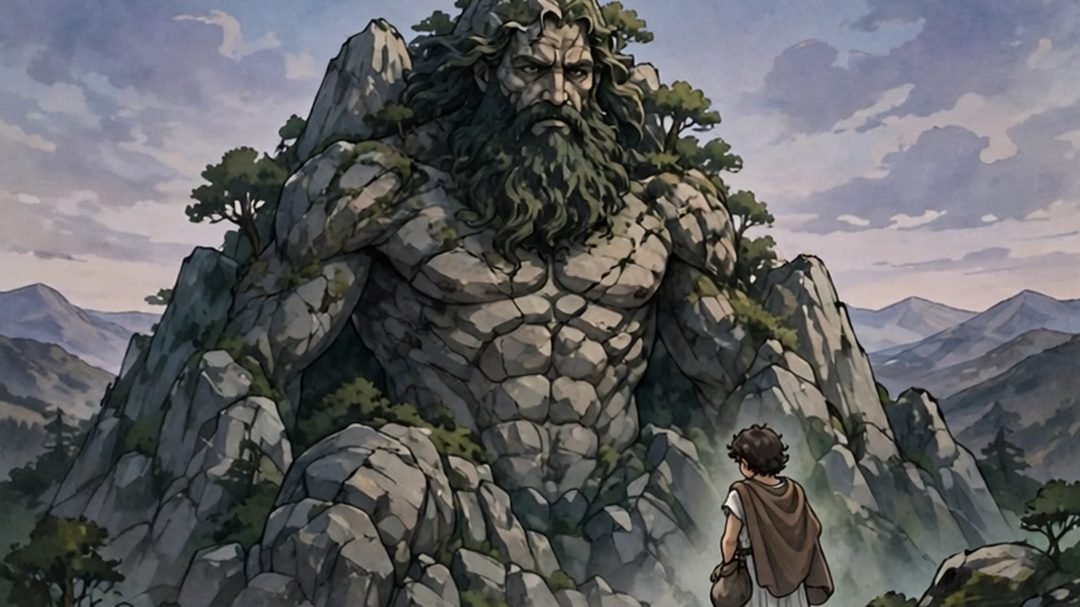
Long ago, the goddess Themis had warned him: a son of Zeus will come, and rob you of your golden tree. Perseus turned his own face away — and showed him the gift inside the pouch. The giant's body turned into a mountain: his beard and hair became forests, his shoulders and hands ridges, his head the summit. As what became of the man who holds up the sky, this other telling has been handed down ever since.
Andromeda
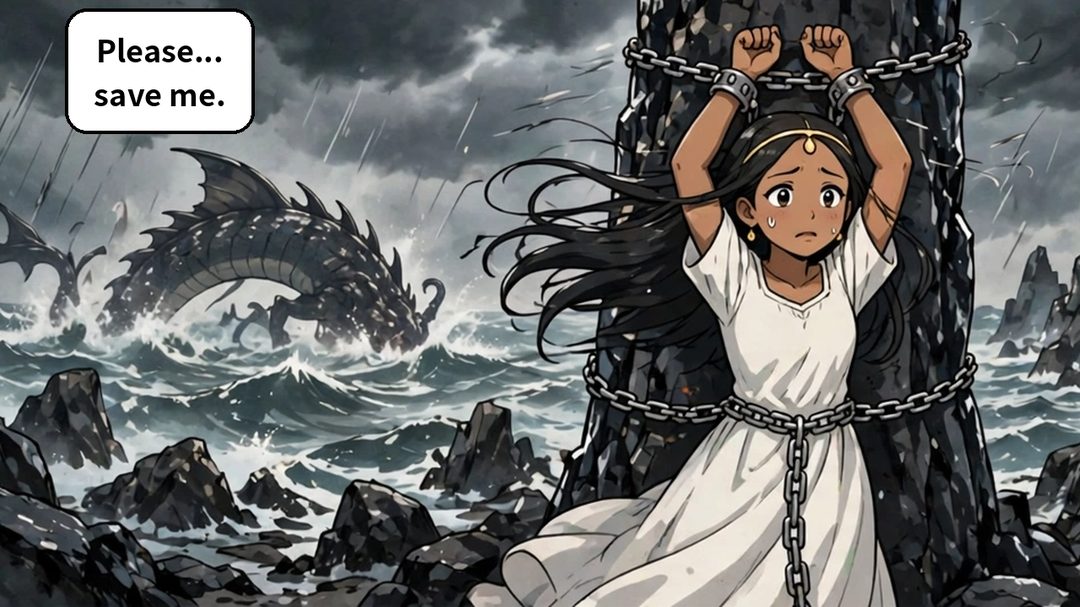
In time, his journey brought him to the coast of Ethiopia. Chained to a rock by the shore was a young woman — Andromeda, a king's daughter. Her mother Cassiepeia had boasted that she was more beautiful than the nymphs of the sea. That was where the calamity began. The angry god of the sea sent a flood — and a great monster. And the oracle declared: offer the princess to the monster, and the land will be saved.
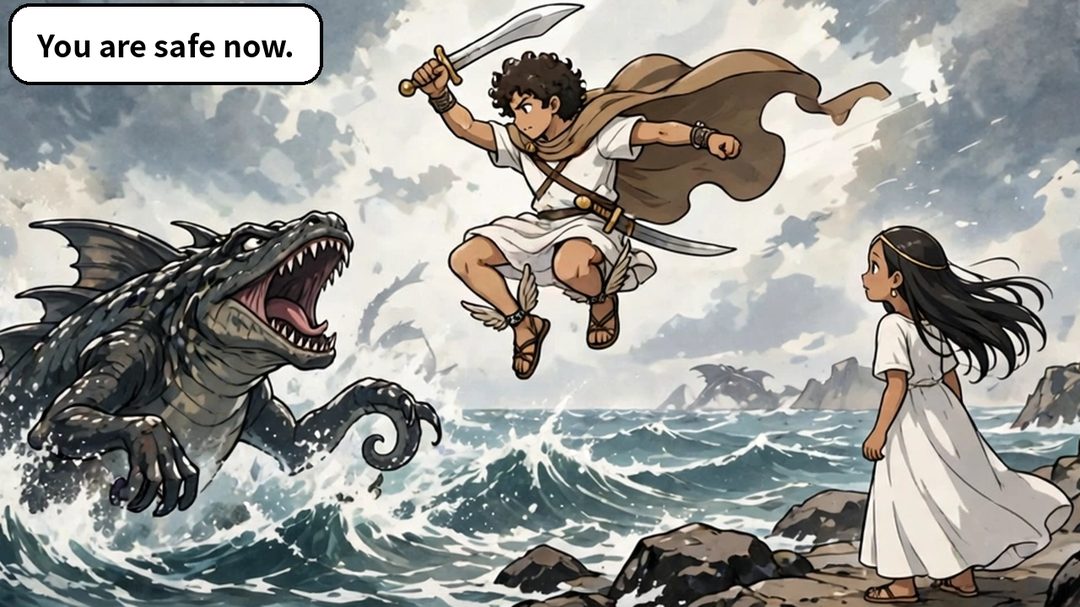
Perseus made the king promise: if I kill the monster, give her to me as my wife. Perseus stood against the monster — and defeated it. The chains were loosed, and Andromeda was free. But Phineus, the man she had first been promised to, was plotting against him. Perseus showed them the head in the pouch. The plotters turned to stone where they stood.
The Return
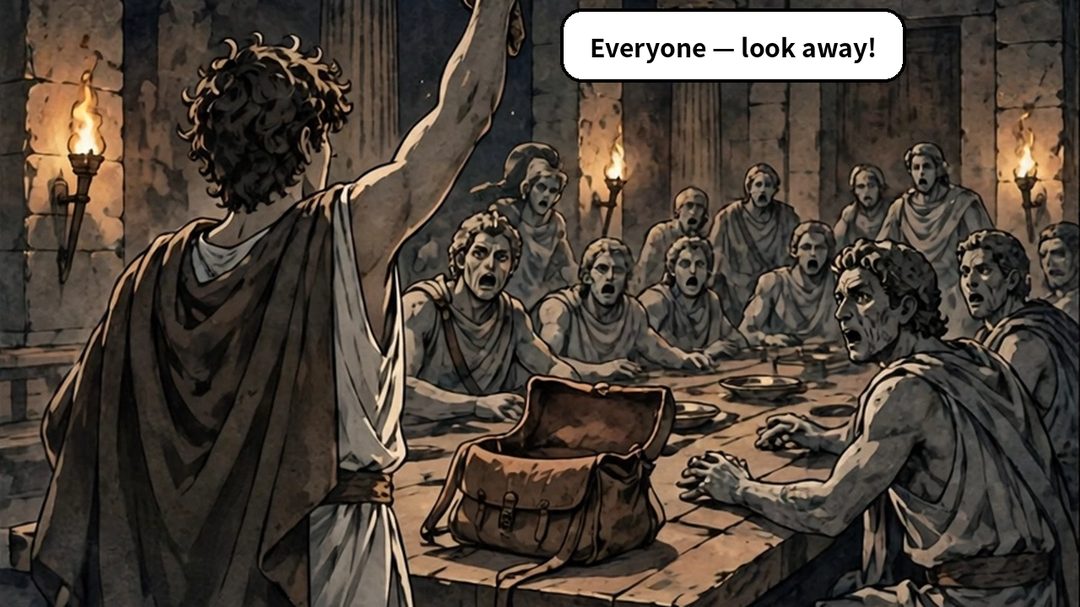
Returning to Seriphos, Perseus found his mother and Dictys fled to the altar for refuge. The king had still been trying to force himself upon Danaë. Perseus entered the palace. The king and his companions were in the middle of a feast. He turned his own face away — and lifted the head in the pouch high. Everyone who saw it turned to stone, frozen in the pose of that moment.
A story that began with a plot ended in stone.
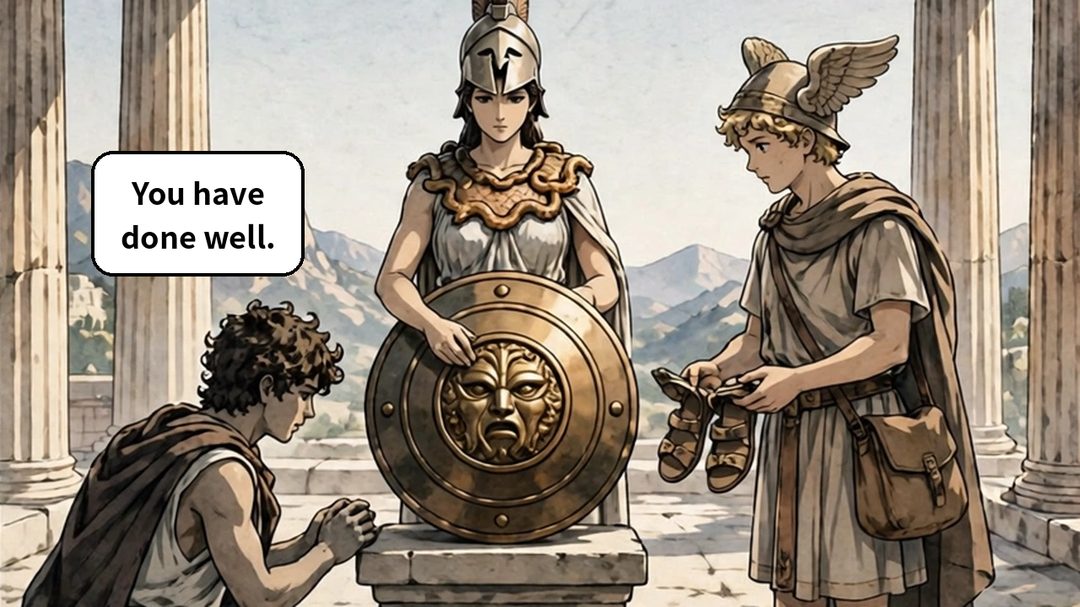
Dictys was set upon the island's throne. The sandals, the pouch, and the cap were returned through Hermes to their owners. And the Gorgon's head was given to Athena. The goddess set it in the center of her own shield.
The Prophecy Fulfilled
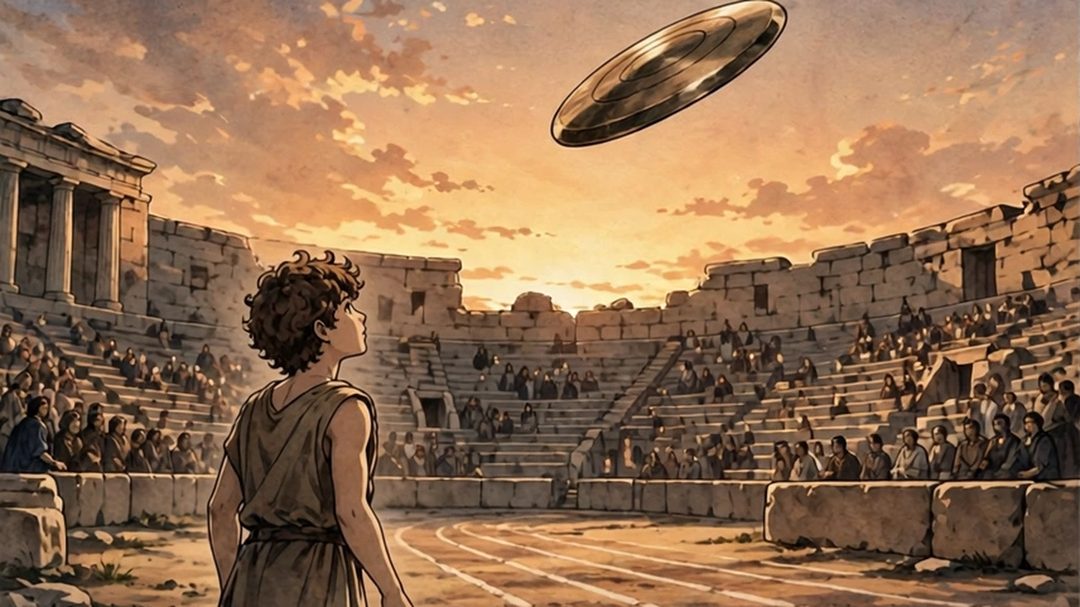
With everything finished, Perseus set out for Argos, his homeland, with his mother and his wife. He went to meet his grandfather Acrisius. But the king, fearing the oracle, had left his land and fled to the north. In the city of Larissa, funeral games were being held for the dead king.
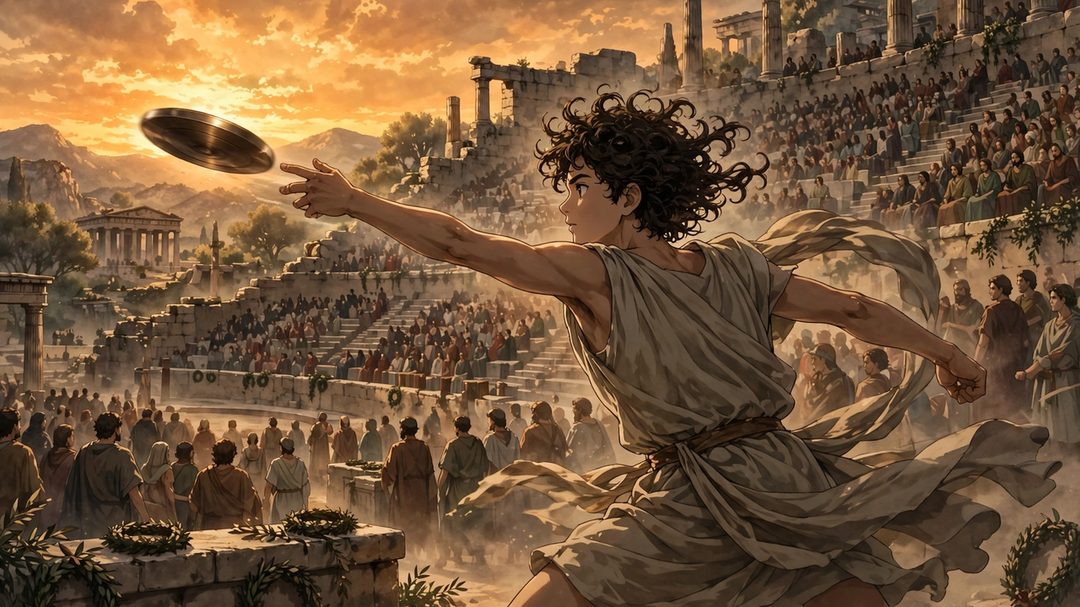
Perseus joined the contests. And then came his turn to throw the discus. The discus flew across the field — and struck the foot of an old man among the watchers.
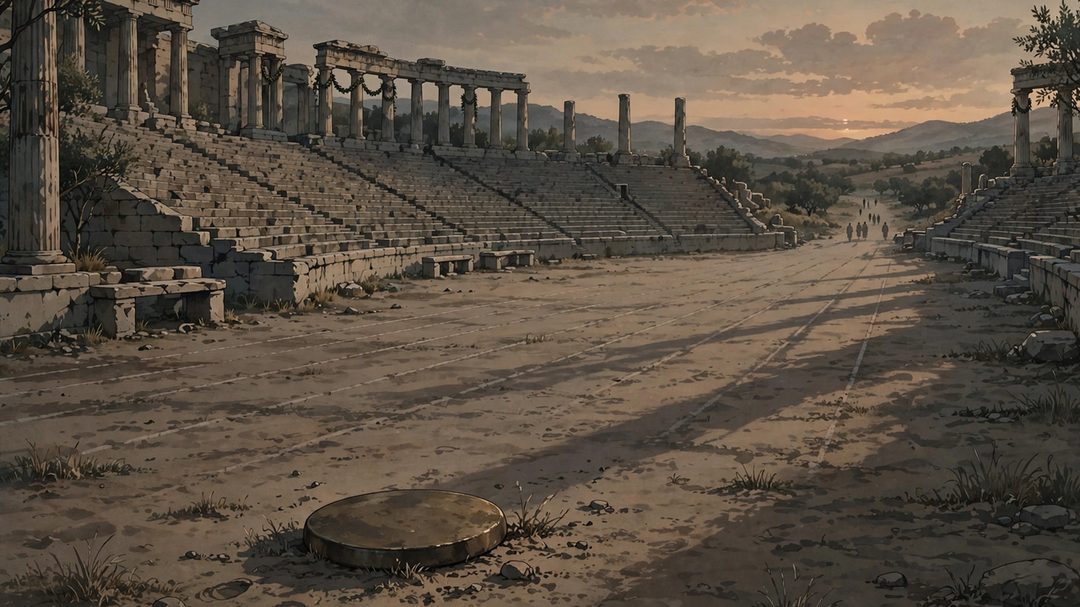
That old man was Acrisius. The prophecy he had fled all his life was fulfilled, not in battle, but by accident. Perseus buried his grandfather with honor. But he was ashamed to inherit the kingdom of the man who had died by his hand.
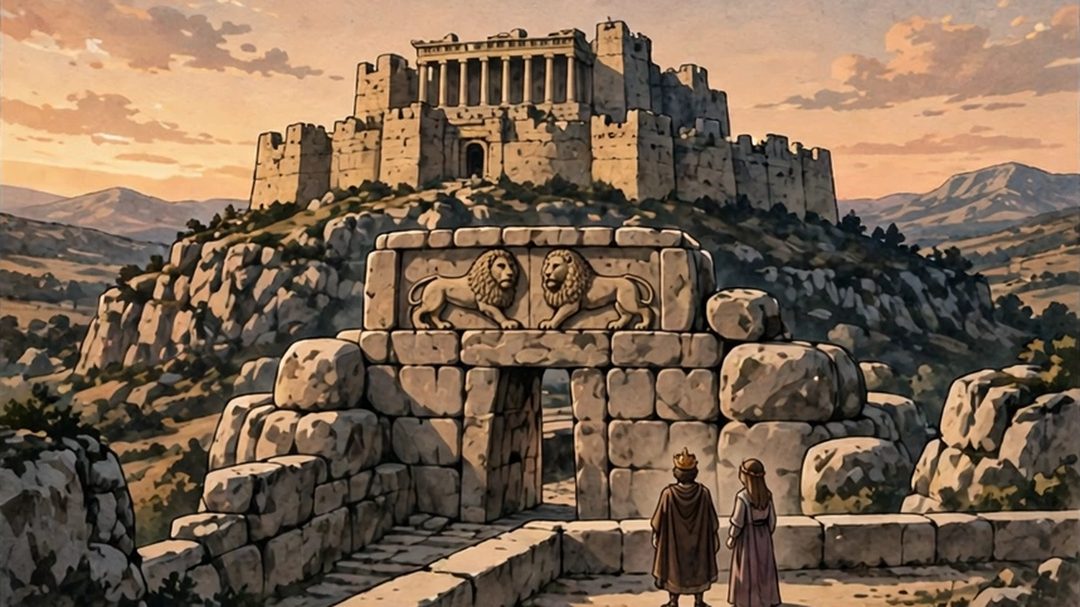
He exchanged kingdoms with the neighboring land, and became king of Mycenae. It was neither hatred nor war that fulfilled the prophecy. And from there, Perseus built a kingdom of his own.
About the Sources
Now, let us be clear about where today's story comes from. The main thread follows Apollodorus, in Book Two of his Library. The tale of Atlas is not in that book. We told it apart, as Ovid's telling in the Metamorphoses. Where the old tellings differ, we chose one main form to follow.
In Summary
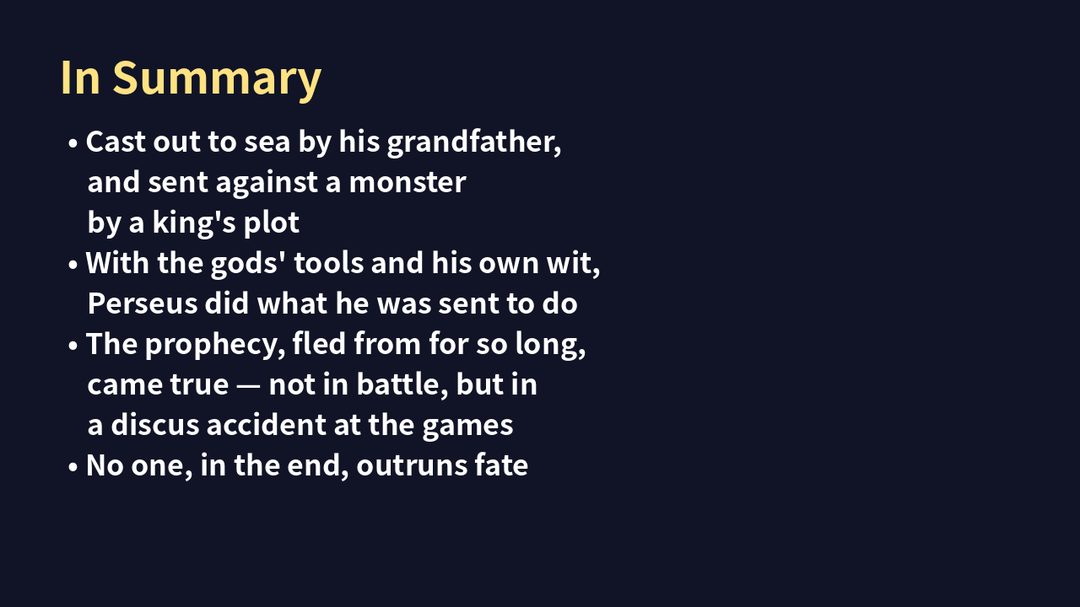
To sum up: Perseus did not take that head by brute force. With tools, with wit, and with the courage never to look, he came home alive. And the prophecy, fled from for so long, caught up with them at last, in the most unexpected form.
Sources and basis
Sources
- Apollodorus, Library 2.4.1–2.4.5 — the standard for the main thread.
- Ovid, Metamorphoses, Books 4–5 — the Atlas episode and the details of the rescue of Andromeda.
Variants and notes
- The Atlas episode does not appear in Apollodorus; it is Ovid's separate telling, and the text keeps it marked as such.
- The speech-bubble dialogue is original writing that keeps the meaning of the ancient scenes.