Theseus — The Life of Theseus
The hero's ship became a question of philosophy
From the sword beneath the rock, to the thread in the labyrinth, to the black sail — the life of the hero of Athens, and why the ship that carried him home is still argued about today.
Introduction
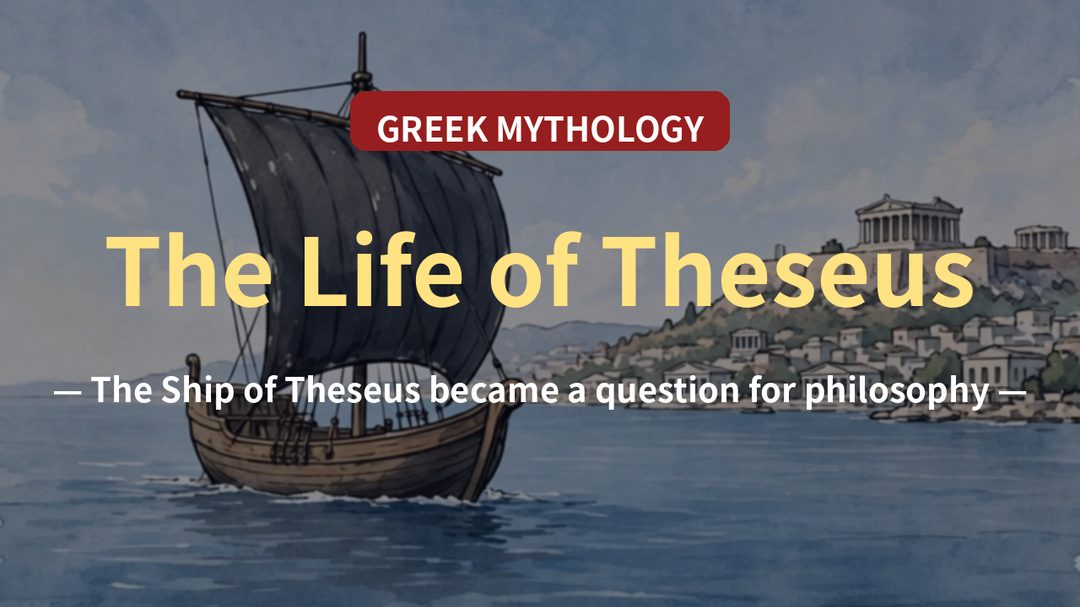
Let us begin with an old ship — a ship with thirty oars. It was the ship that brought the hero Theseus home from Crete, with the young Athenians safe aboard. Theseus was the hero who slew the monster of the Labyrinth. And his ship, in time, became a question for philosophers.
The Promise Under the Rock
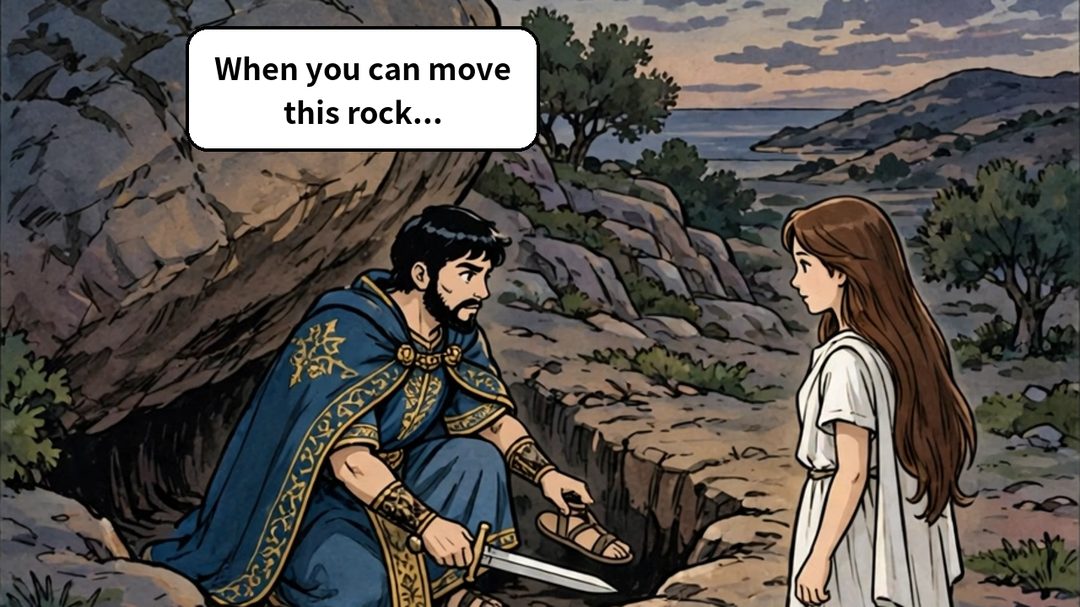
The father of Theseus was Aegeus, the king of Athens. As a young man, the king had come to Troezen, and there he was joined with Aethra, the king's daughter. On the day he left for Athens, he hid his own sword and sandals beneath a great rock. If a son is born, he said, and the boy grows strong enough to shift this rock — then send him to me.
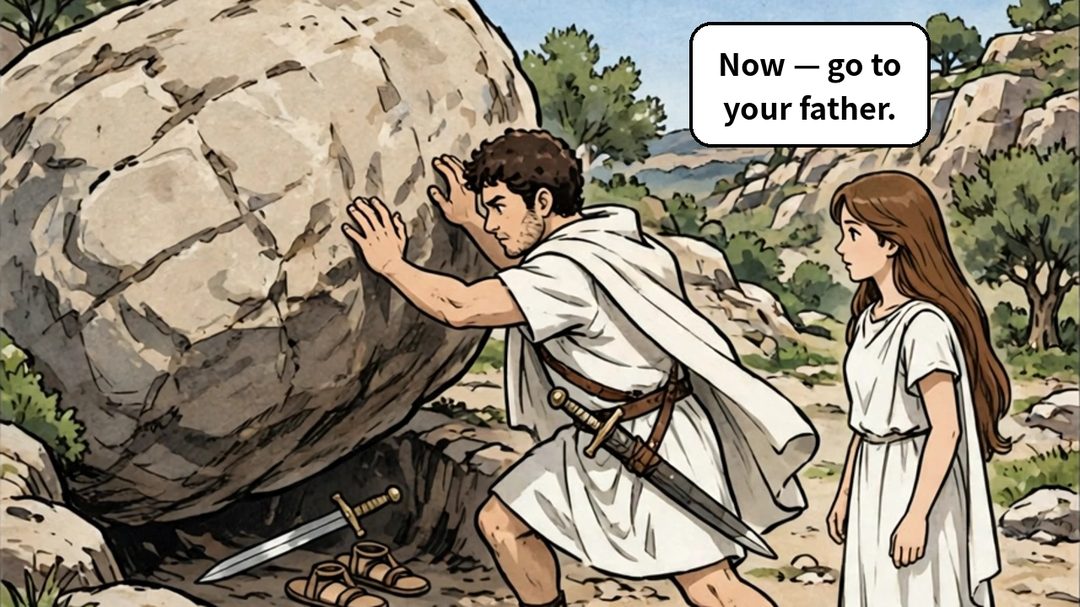
The years passed, and the boy Theseus grew into a powerful young man. With his bare hands he pushed the great rock aside, and took out the sword and the sandals — the tokens of his father.
The Road to Athens
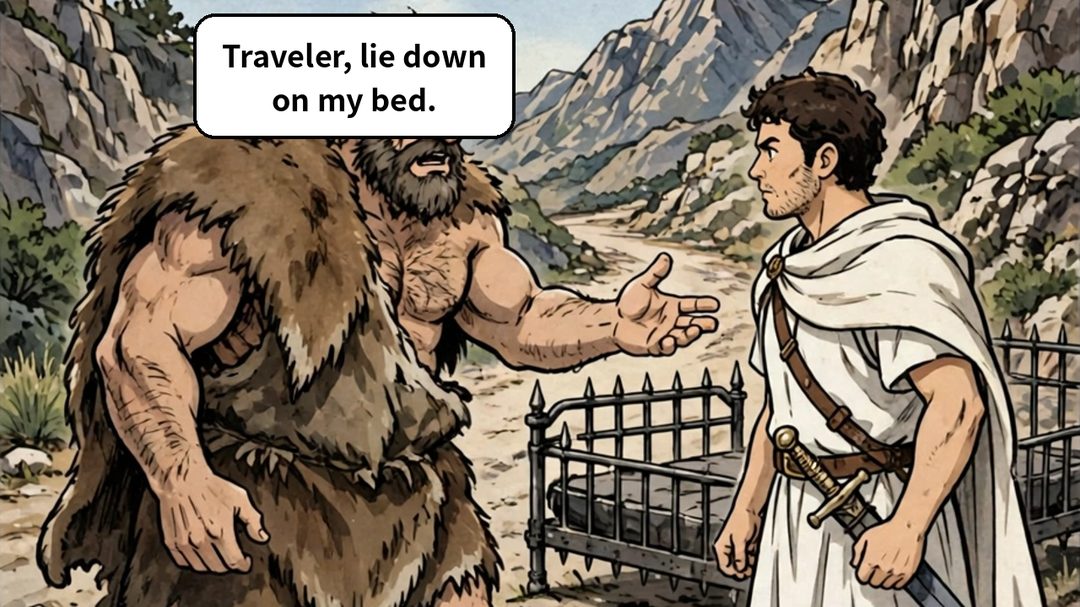
His mother and grandfather urged him to take the safe road — by sea. But Theseus chose the dangerous road by land. Along that road waited men who preyed on travelers — among them Procrustes, who forced travelers to lie upon his bed, and killed them there. One by one, Theseus gave those men the very treatment they had dealt to travelers — and cleared the road.
And so he came to Athens, already wearing the name of a hero.
Father and Son
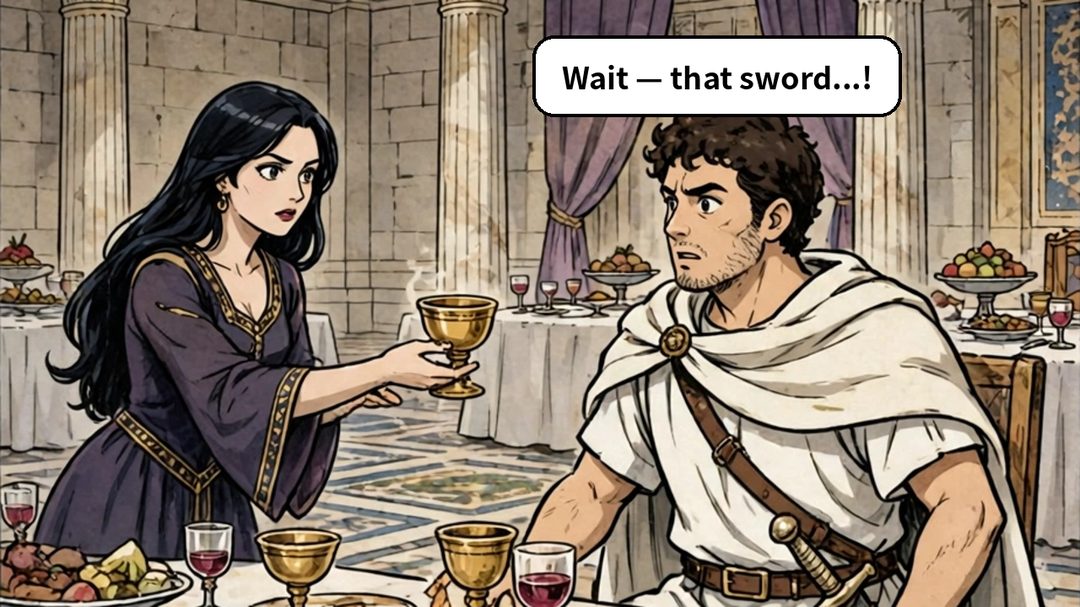
But in Athens, the king's wife Medea saw danger in this unknown young man. At a banquet, a cup of poison was set before him. At that moment, Theseus drew the sword at his hip, to cut his meat. The king's eye fell upon that sword. It was his own — the one he had hidden beneath the rock. The cup was dashed aside — and father and son stood face to face, for the first time in sixteen years.
The Tribute to Crete
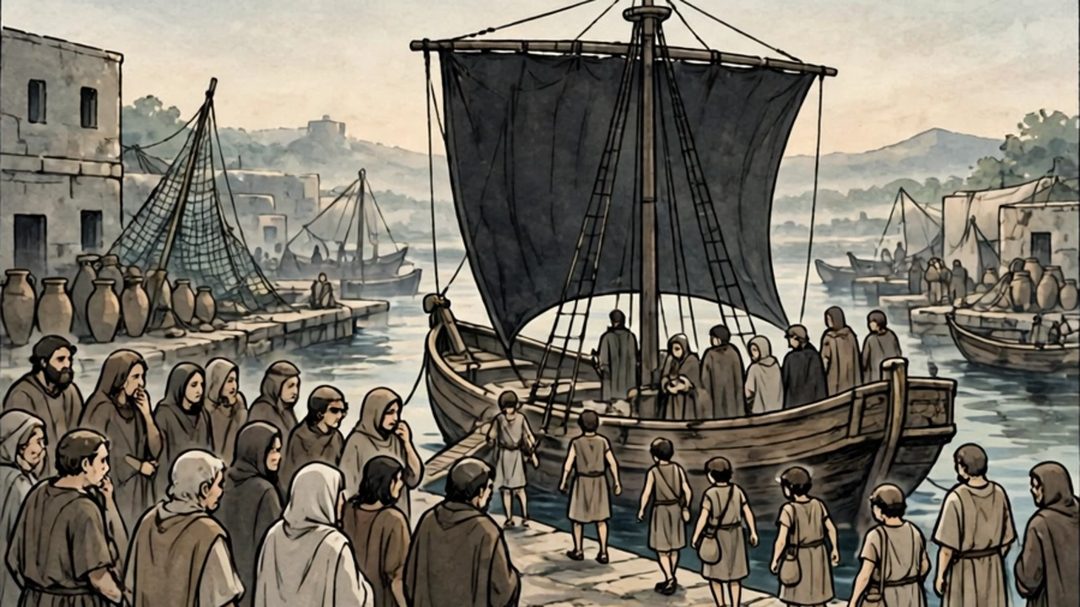
In those days, Athens was paying a heavy tribute to Crete. Every ninth year, fourteen young Athenians were sent across the sea — as food for the Minotaur, the monster of the Labyrinth. Twice the ship had already sailed. Not one of the young people had ever come back.
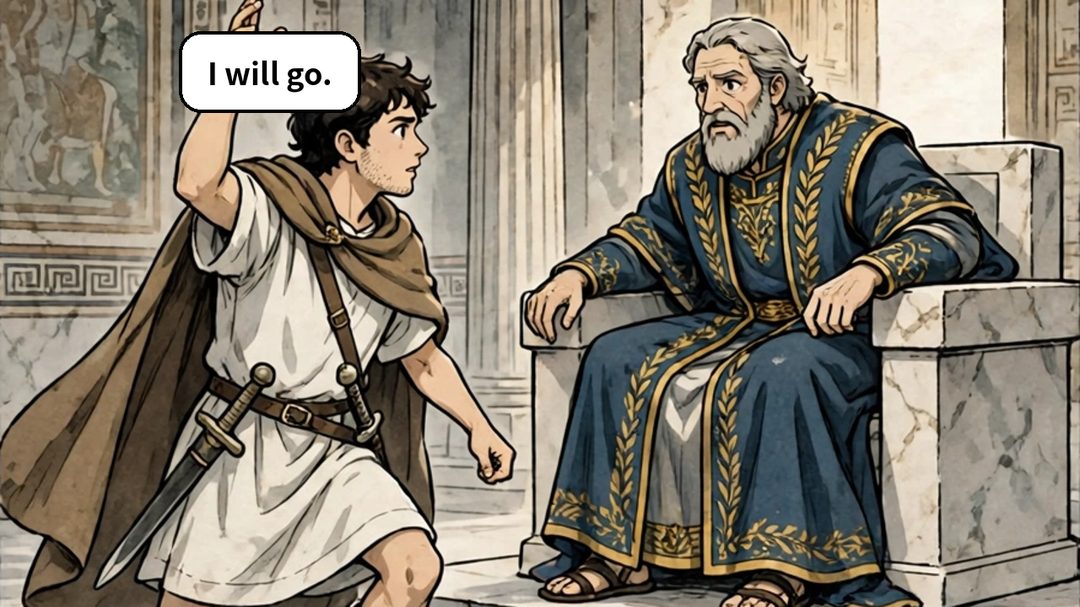
When the time of the third tribute came, Theseus offered himself — to be counted among the fourteen. "The monster — I will kill it myself." So he declared, standing before his father. His father tried to hold him back; but Theseus, they say, quietly persuaded him.
The Promise of the White Sail
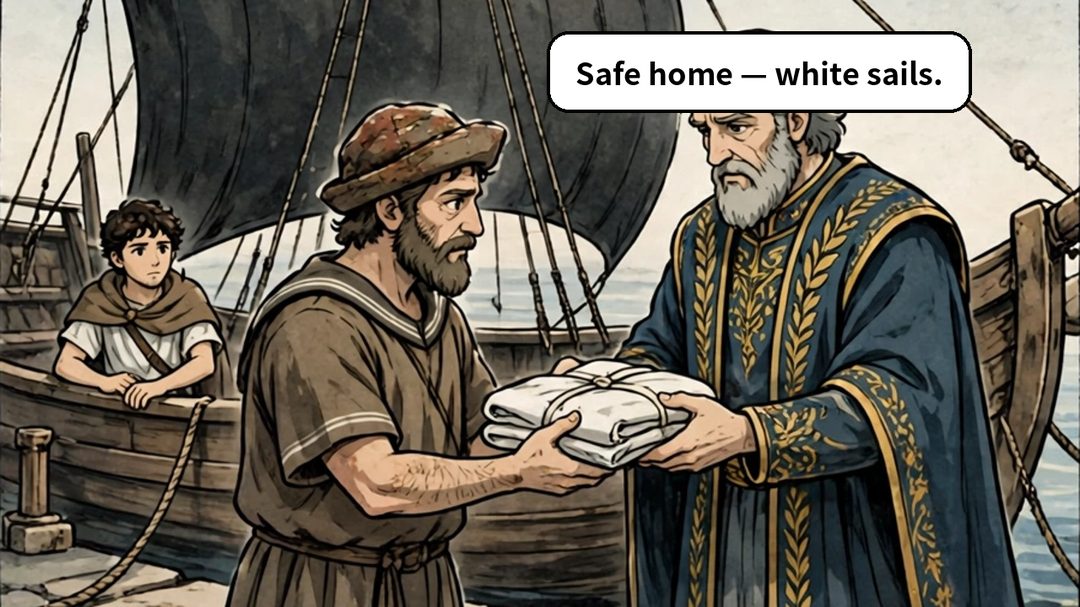
The ships that sailed to Crete had always carried a black sail — the color of mourning, for a voyage with no return. But this time, the king entrusted the helmsman with a white sail as well. If Theseus came home alive, the ship would return under the white sail. If not, the black sail would stay. It was one simple signal, that could be read from far away.
Ariadne's Thread
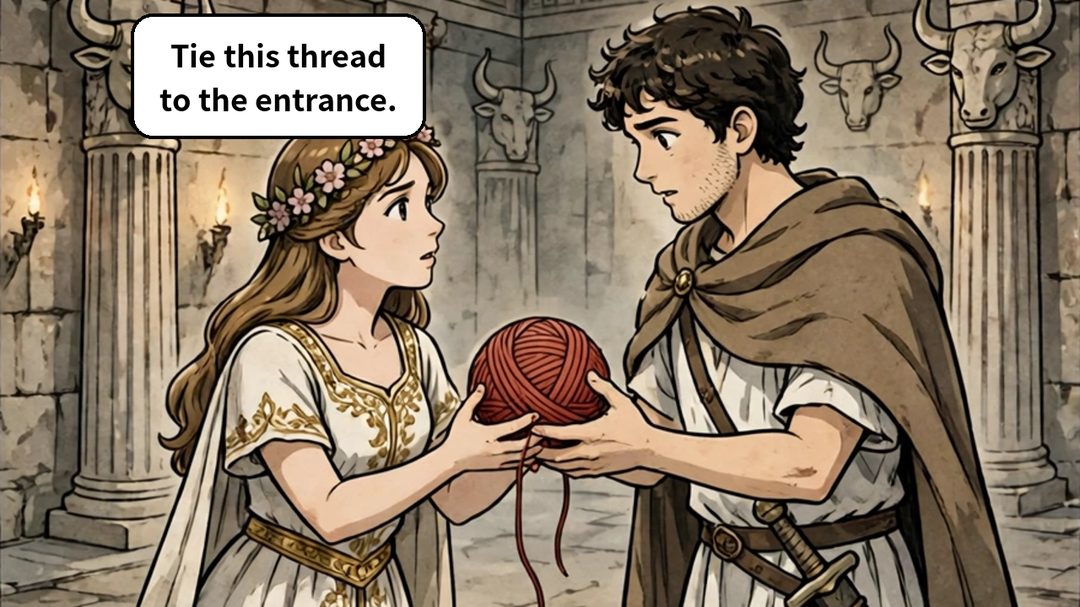
In Crete, the king's daughter Ariadne fell in love with Theseus. She gave him a ball of thread — and, some say, a sword as well. Tie one end of the thread to the entrance of the Labyrinth. On the way back, follow the thread. It was a plan that turned the wisdom of Daedalus, the Labyrinth's own maker, back against his maze. She asked only one thing in return: that he take her away from Crete.
The Labyrinth
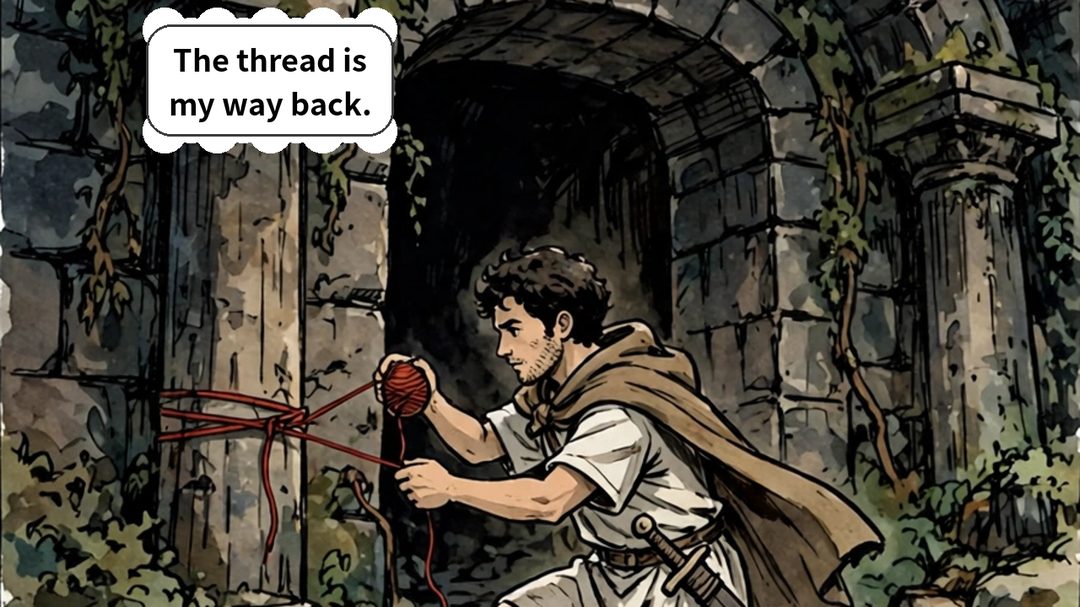
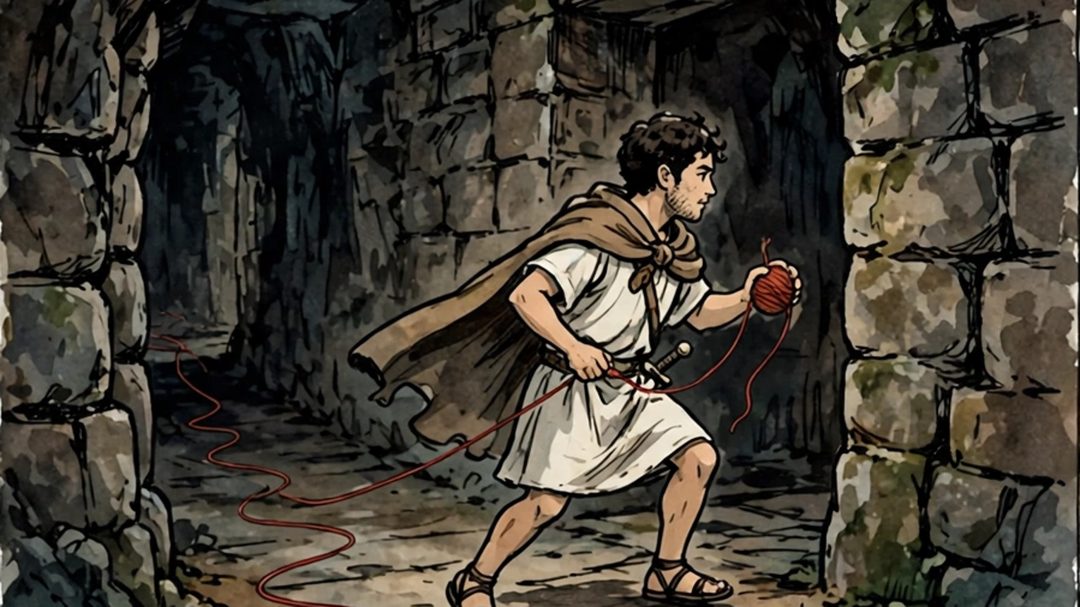
Inside the Labyrinth, it was night even at noon. Its twisting paths stole all sense of direction from those who entered. Theseus tied the thread, and step by step, he went deeper in.
The one who waited at the deepest place was a monster — with the head of a bull, and the body of a man. Many young lives had ended in that darkness.
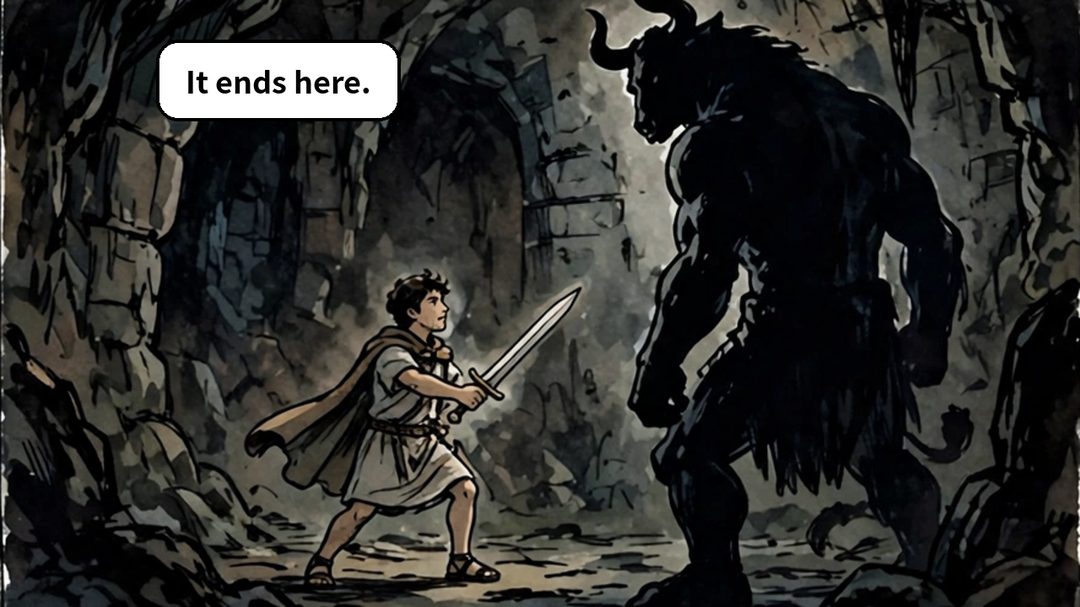
Of the fight itself, the old tales tell us very little. Only the outcome is certain: the monster fell, and Theseus lived. Some say he killed it with the sword; others, with his bare hands. Here too, the tellings divide.
The Escape
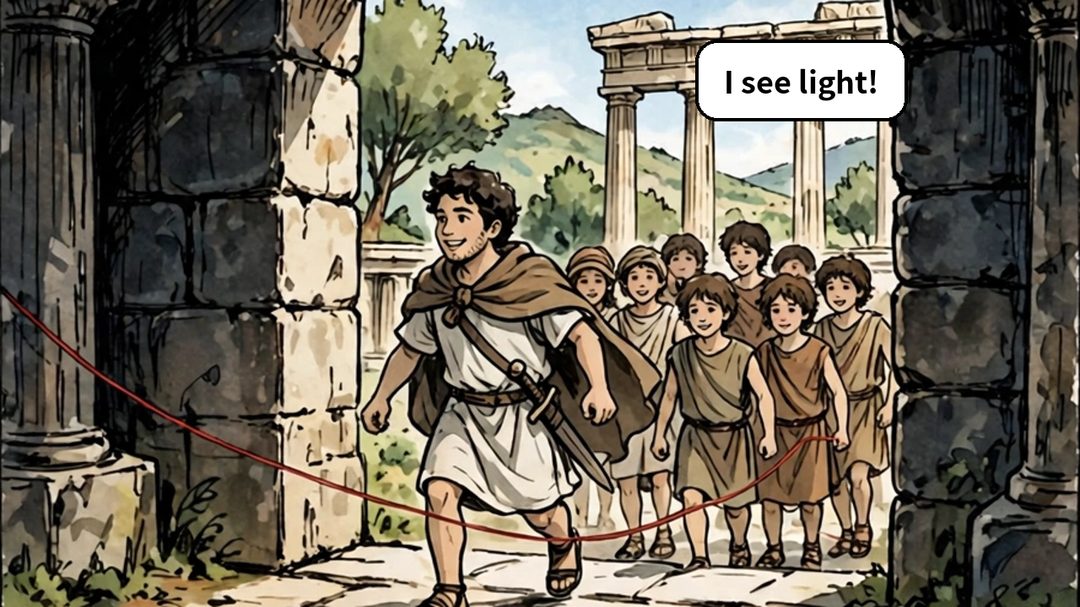
Following the thread, he led the young Athenians back into the light. And with that, the tribute voyages ended. Never again would Athens send its children to the monster.
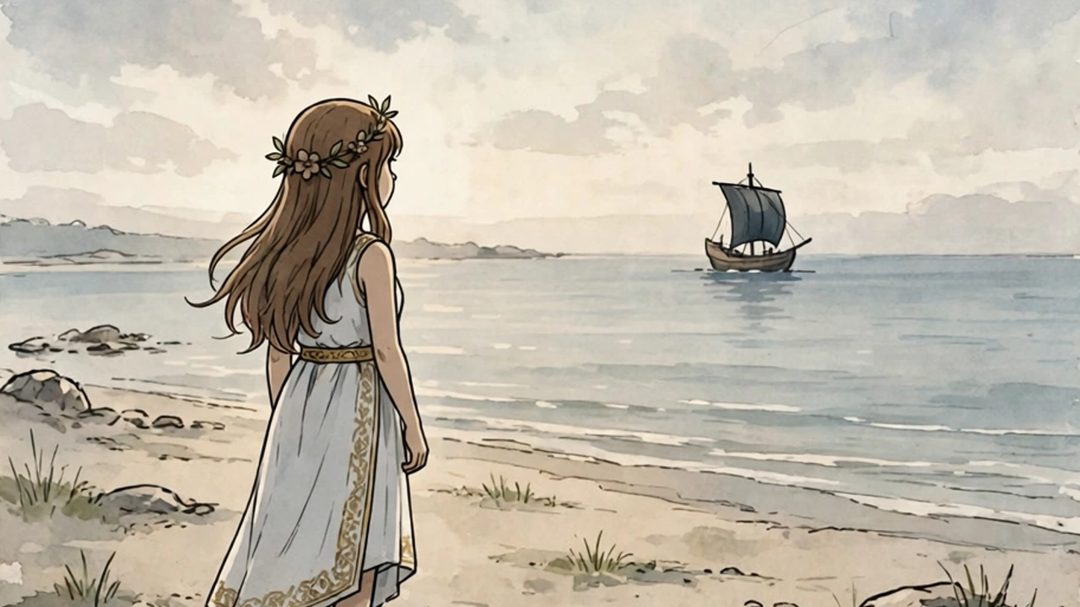
On the way home, the ship put in at the island of Naxos. And there, Theseus sailed away — leaving Ariadne behind. Why did he leave her? For another love, say some. Because a god frightened him in a dream, say others. The tellings divide. Only this is certain: she remained on the island, and the ship sailed on.
The Black Sail
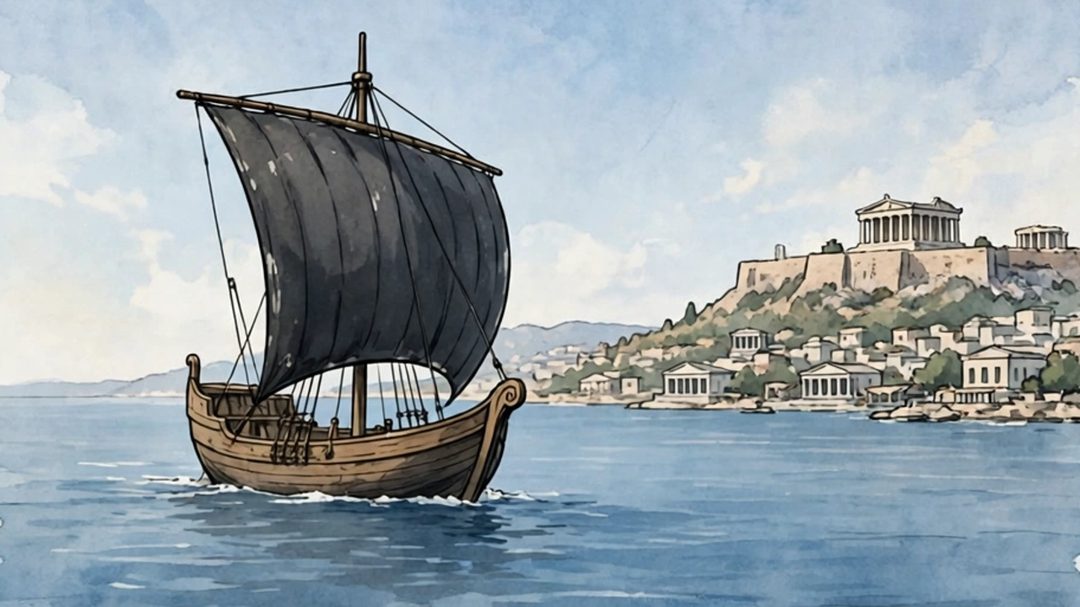
But as Athens drew near, the sail above the ship was still black. Theseus had forgotten to change it for the white one, as he had promised. Was it in his joy, or in his grief? The reason has not come down to us.
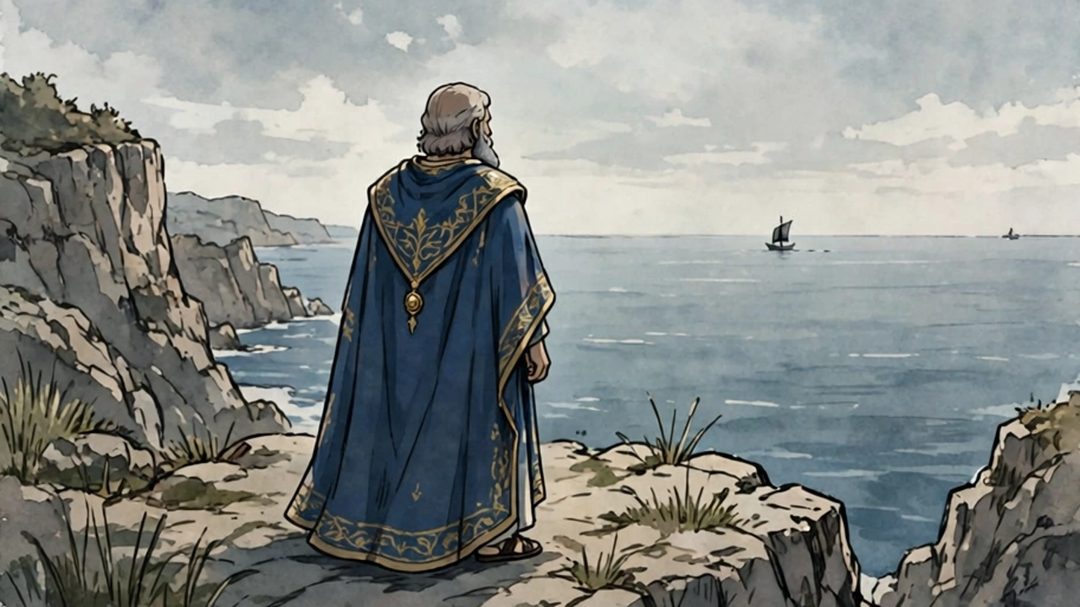
All that time, his father Aegeus stood upon the headland, watching the sea. At last a sail appeared on the horizon — and it was black. Believing his son dead, the king threw himself down from that place, so the story is told. And that sea bears his name to this day: the Aegean.
The King
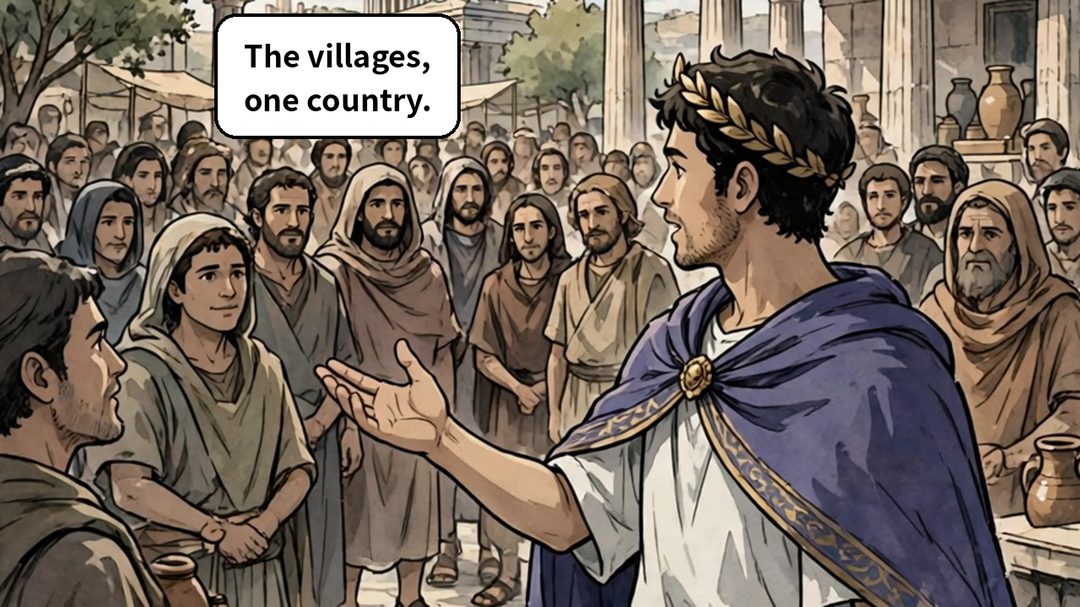
Theseus came ashore — and learned that his father was dead. His triumphant return began in mourning. In time he became king, and he drew the scattered villages of Attica together into a single state. The frame of the city of Athens was built in this king's reign — so Plutarch tells us.
The Preserved Ship
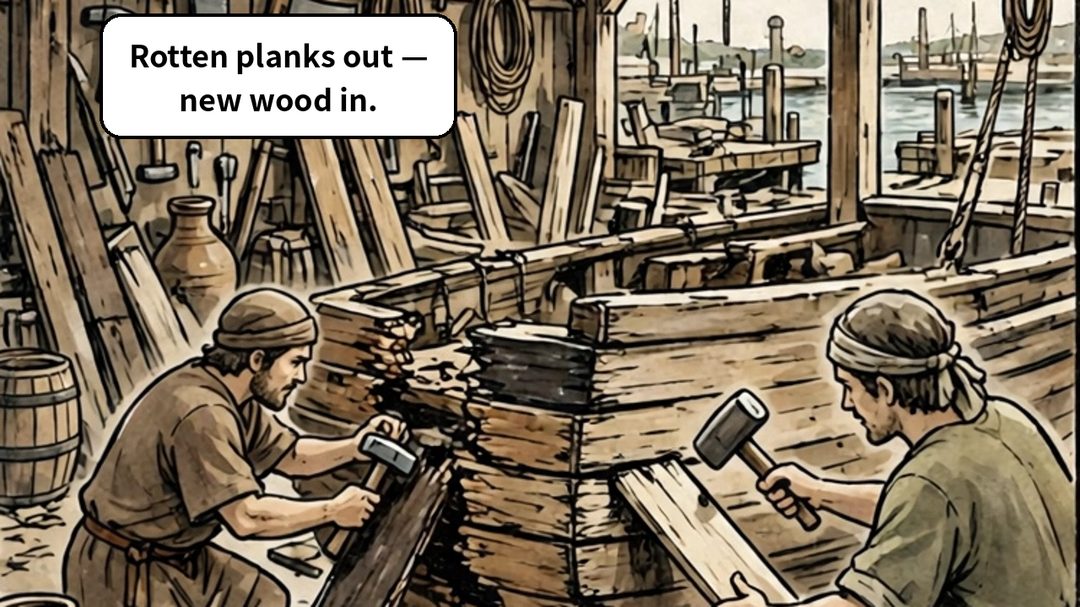
Now — to the story we end with today. The thirty-oared ship that brought Theseus home was treasured by the people of Athens, and preserved. To keep it from rotting away, whenever a plank decayed, it was taken out and replaced with strong new timber. That care went on for centuries — down to the age of a statesman named Demetrius, Plutarch writes.
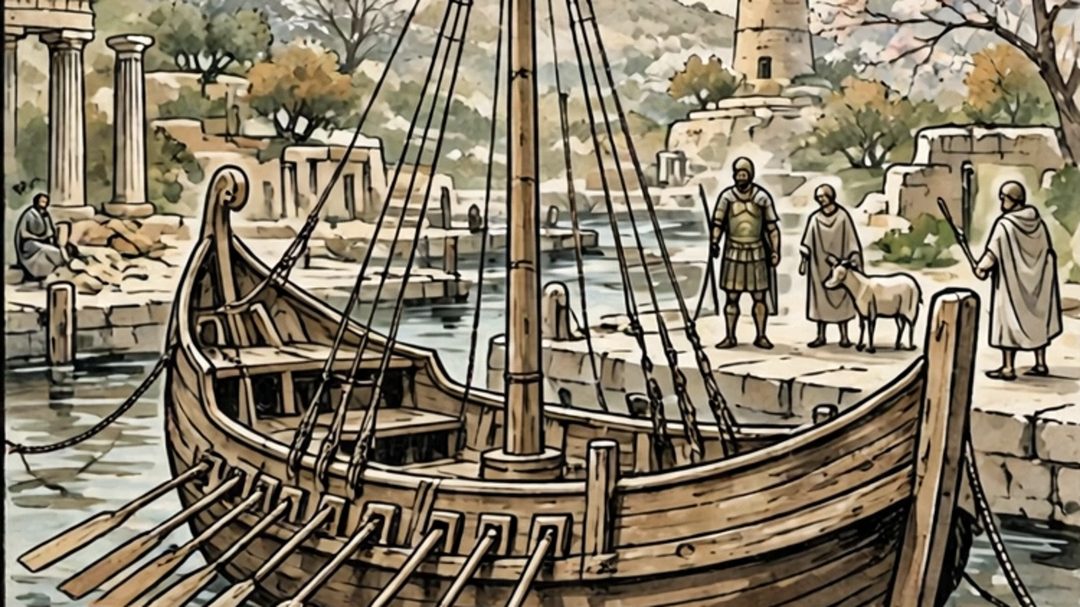
Shipwrights changed, kings changed, ages changed — but the ship remained in the harbor all the while. And yet, all that time, its planks were being replaced — little by little, and without pause.
The Philosophers' Question
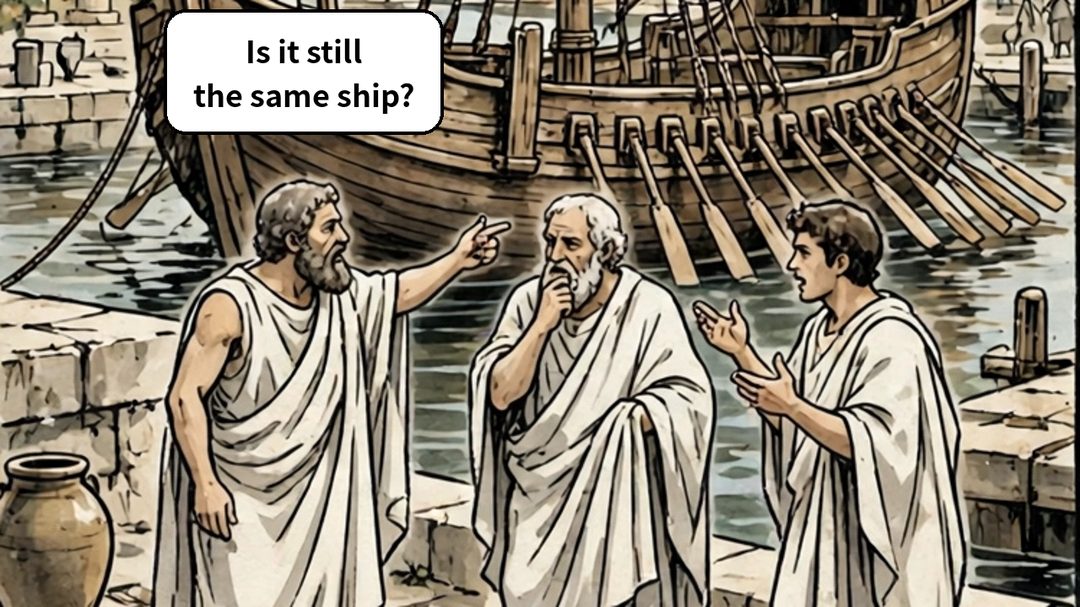
In time, the philosophers began to argue before that ship. When every plank has been replaced with new wood — is it still the ship of Theseus? Some said it was the same ship; others said it was not. Plutarch records that opinion was divided.
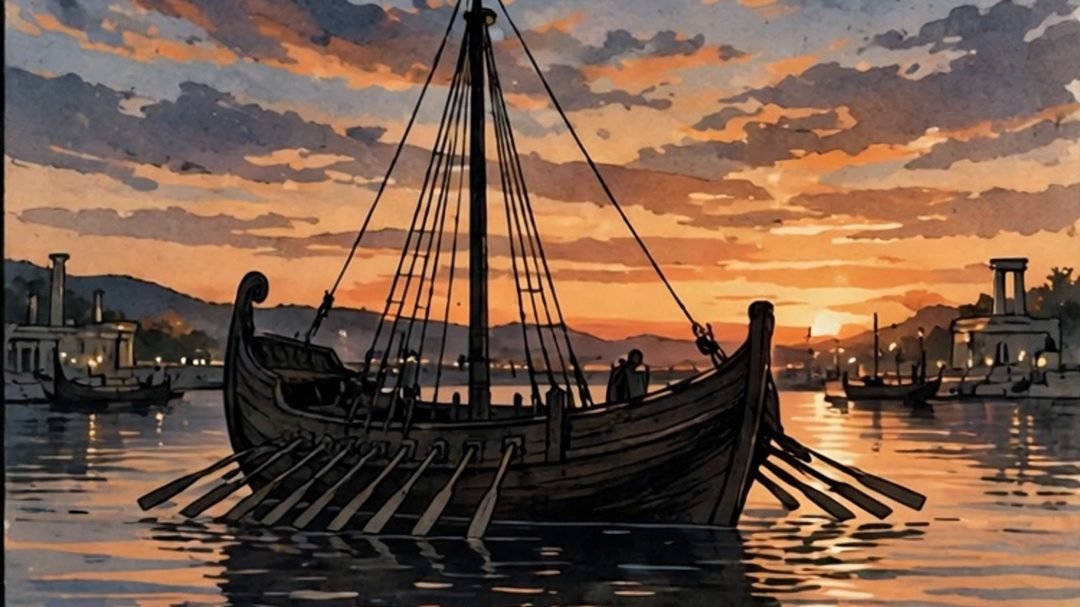
Which answer is right has never been settled, even now. And so the ship of the man who escaped the Labyrinth floats on today — not in a harbor, but in the shape of a question, more than two thousand years later. We ourselves are creatures whose bodies, too, are replaced little by little. Do you think it is the same ship?
About the Sources
Now, let us be clear about where today's story comes from. The main line of the story, and the tale of the ship, rest on Plutarch's Life of Theseus. The details were checked against Apollodorus, in his Library and his Epitome. Where the tellings differ, we have told them apart as we went. The dialogue you hear is written for this telling, within what the scenes themselves mean.
In Summary
To sum up: Theseus escaped the Labyrinth, lost his father, and became a king. And his ship, kept alive plank by replaced plank, became a question: what does it mean for a thing to stay the same?
Sources and basis
Sources
- Plutarch, Life of Theseus — the main thread, including the story of the preserved ship.
- Apollodorus, Library and Epitome — used for cross-checking details.
Variants and notes
- Simonides gives the sail a different colour — crimson, not white. This telling follows the main tradition.
- Why Ariadne was left on Naxos, and exactly how the Minotaur was killed, are told in more than one way; this telling does not force a single answer.
- The speech-bubble dialogue is original writing that keeps the meaning of the ancient scenes.